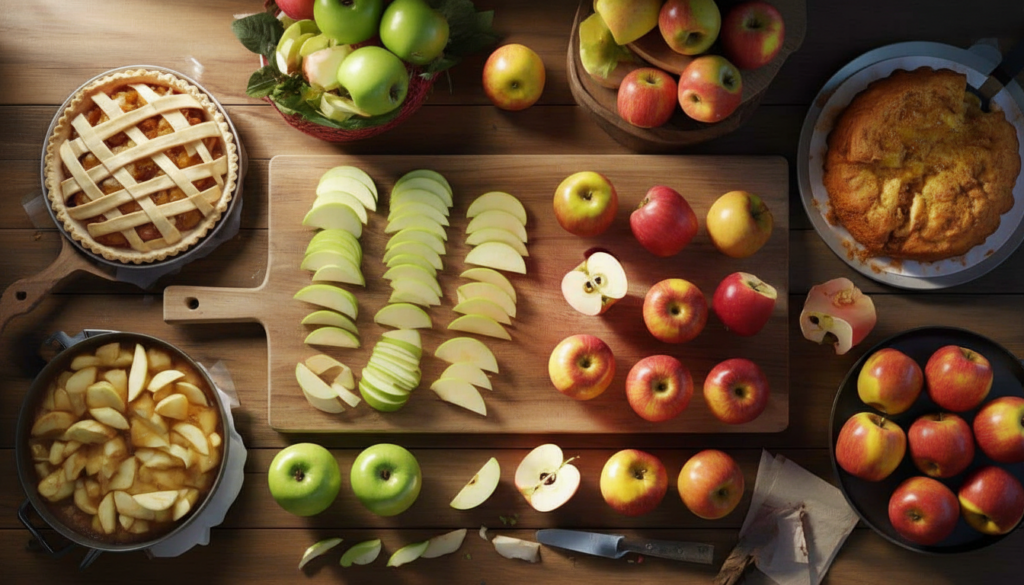
I blamed the oven when I ruined a tarte Tatin for the first time. Then the caramel came. I didn’t realise until later that the wrong apples were the real problem. They were sitting quietly on the counter. I picked up a random bag on sale and felt very smart about how much money I saved. When I opened the door forty minutes later, I was greeted by a lovely smell and a sad puddle of apple mush where neat slices should have been.
Since then, I’ve been watching people in the fruit section. They are unsure, squeeze, sniff, and throw a few apples in the cart, hoping for the best. It usually works for snacking. Not so much for baking.
Not every apple is good for every dessert.

Why the “any apple will do” myth keeps ruining desserts
“Just use whatever apples you have” is a quiet lie that is going around in kitchens. It sounds useful, freeing, and even a little rebellious. Then your crisp gets watery, your tart falls apart, and your cake tastes like sweet cardboard. You didn’t suddenly get bad at baking. The apple just wasn’t right for the job.

Apples are like people in a cast. Some keep their shape when they get hot. Some turn into compote. Some bring sharp acidity, some bring sugar, and some bring perfume. It’s like asking the drummer to play the violin if you think they are the same. Yes, you’ll get sound, but not the song you wanted.
Imagine that you make a classic apple crumble with Gala apples because that’s what your kids like to eat. It comes out golden, and the topping looks great. You spoon it into bowls, and the apples under the crust are hard to see. They’ve collapsed into a baby-food texture, sweet but flat. The top is crunchy, but the inside is soft.
Try the same crumble with Pink Lady or Granny Smith apples now. You suddenly get juicy pieces that are just soft enough to resist the spoon. The sauce clings to the fruit, not the bottom of the dish. Same recipe, same oven, different apples. The difference seems almost unfair.
It all comes down to three things: texture, acidity, and aromatic power. Some apples, like Golden Delicious, soften quickly and give a creamy filling, great for cakes or compotes. Others, like Braeburn or Honeycrisp, keep their structure and bring that satisfying chew to tarts and crumbles. The more acidic varieties wake up sugar and spices, while very sweet ones can make desserts taste flat.
Once you start seeing apples through this simple lens, your recipes stop being a lottery. They start being a choice.
Match the apple to the dessert: a simple, no-drama method
Start with one basic question: do you want your apples to hold their shape, or melt? For a neat tart, an upside-down tarte Tatin, or pretty rosettes on a galette, you need firm apples that don’t collapse. Think **Granny Smith**, Braeburn, Pink Lady, Honeycrisp. These keep distinct slices even after a long bake.
For muffins, cakes, compotes, or fillings you blend anyway, you can move to softer varieties: Golden Delicious, McIntosh, Jonagold. They break down faster and give that silky, jammy texture. The trick is to choose apples that behave the way your dessert needs, not just what’s on sale.
We’ve all been there, that moment when you try to copy a recipe photo from Pinterest and end up with something that looks… interpretive. Often, the author used a crisp, tart apple, but you picked a super-sweet, soft one. Your tart leaks juice, the bottom sogs, and the slices fuse into a beige blanket. You didn’t “fail”. You were set up.
When in doubt, remember this plain-truth sentence: strong heat punishes weak apples. If a dessert goes into the oven for more than 30 minutes, lean toward firm and slightly tart varieties. Shorter baking or pan-cooked desserts (like skillet apples or pancakes) tolerate softer apples because they’re under less stress.

One pastry chef I interviewed told me, *“Choosing the apple is 50% of the recipe, we just don’t write it in the ingredients list.”* It stuck with me. We talk endlessly about flour brands and fancy salts, but the apple is often treated like background noise.
For a quick mental checklist, think in three families:
- Firm & tart (structure heroes) – Granny Smith, Pink Lady, Braeburn, Honeycrisp: great for pies, tarts, tarte Tatin, crumbles.
- Medium texture & balanced (all-rounders) – Jonagold, Elstar, Idared: good for almost everything, from cakes to galettes.
- Soft & sweet (melters)
The cheat-sheet you’ll actually use
Next time you face that bewildering apple display, think dessert first, then variety. For classic American-style deep-dish pie, you want a mix: one tart variety for freshness, one sweeter, aromatic one for perfume. Granny Smith + Golden, Braeburn + Jonagold, Pink Lady + Gala. The blend gives depth that a single apple can’t reach.
For tarte Tatin, go for apples that caramelise well and don’t disintegrate. Braeburn, Golden (picked quite firm), or Pink Lady behave beautifully in that sticky, bubbling sugar. For strudels, go with firm, slightly tart kinds so the filling doesn’t turn into a wet blob that tears the dough. Your oven isn’t the enemy. The wrong apple is.
One of the most common mistakes is using only sweet apples “because the kids don’t like sour fruit”. In baking, a bit of acidity is your best ally. It balances sugar and gives that mouth-watering effect that makes you want another bite. Without it, desserts taste one-note and heavy, even if the sugar content is the same.
Another classic trap: choosing only by crunch when raw. Some very crunchy apples turn woolly after cooking. If you’ve ever bitten into a slice of baked apple that felt oddly dry and mealy, that’s what happened. Trust past experience. If a variety disappointed you in a pie once, it probably wasn’t a fluke.
- There’s a quiet joy in knowing exactly why this pie worked, when last year’s didn’t.
- For pies & crumbles – Mix at least two varieties: one tart (Granny Smith, Braeburn), one sweeter (Golden, Jonagold).
- For cakes & muffins – Slightly softer, aromatic apples like Golden or Gala, diced small so they melt into the crumb.
- For compotes & sauces – McIntosh, Cortland, or any soft apple that collapses easily; add a tart one if you like a sharper taste.
- For raw desserts & salads – Honeycrisp, Pink Lady, or Jazz, where crispness and perfume matter more than baking behaviour.
- For kids’ snacks that double as baking apples – Pink Lady or Jonagold: sweet enough raw, solid enough in the oven.
A small shift that quietly upgrades every dessert
Once you start pairing apples to recipes on purpose, you can’t unlearn it. You’ll find yourself reading “4 apples” in a recipe and automatically asking, “Which ones?” You’ll notice that your grandmother always used slightly green Golden for her tart, or that your neighbour’s famous crumble tastes so bright because she sneaks in a couple of very tart apples nobody eats raw.
You may even begin to play. Try a smoky cinnamon crumble with mostly Granny Smith and just two Pink Lady for perfume. Bake a rustic galette with thinly sliced Honeycrisp and almost no sugar, letting the fruit speak. Or switch varieties with the seasons, discovering that your January pie needs different apples than your September one.
The bag of “whatever apples” will feel less and less tempting. You won’t need more time, more tools, or more talent. Just a tiny decision, at the fruit aisle, with very real consequences on the plate.
| Key point | Detail | Value for the reader |
|---|---|---|
| Texture first | Choose firm apples for structure, soft ones for compote-style fillings | Fewer “mushy pie” disasters and more photo-worthy slices |
| Mix varieties | Blend tart and sweet apples in the same dessert | Deeper flavour, better balance, less need for extra sugar |
| Think dessert, then apple | Start from the recipe (pie, cake, compote) to pick the right type | Simple, repeatable method that works with any supermarket |
FAQ:
Which apple is best for a classic apple pie?Granny Smith is a solid base because it holds its shape and brings acidity. Combine it with a sweeter, more aromatic variety like Golden or Jonagold for complexity.
Can I use the same apples for snacking and baking?Yes, as long as they’re fairly firm and not overly sweet. Pink Lady, Honeycrisp, and Braeburn work well both ways and won’t collapse in the oven.
Why did my apples turn into puree in my tart?You probably used a soft variety like McIntosh or very ripe Golden. These break down quickly under heat and are better for compotes or cakes than for neat tarts.
Do I need to peel apples for desserts?For pies, tarts, and compotes, peeling gives a smoother texture. For rustic galettes or skillet desserts, you can leave the skin on for colour and fibre, as long as it’s thin and not waxy.
How many apples do I need for a pie?For a standard 23 cm / 9-inch pie dish, plan on 6–8 medium apples, peeled and sliced. The exact number depends on how tall you like your filling and how much they shrink when baked.