It began with a random TikTok clip playing while dinner simmered on the stove. A home cook grabbed a lemon straight from the freezer, hard as a stone, and grated it over pasta like cheese. Then came the bold claim: freezing it could “triple the juice.” That line alone was enough to make anyone pause. Triple From the same lemon? It sounded exaggerated, almost like a kitchen magic trick.
Within days, the idea was everywhere. One friend insisted it worked brilliantly. Another dismissed it as social media hype. Comment sections turned into battlegrounds—Freeze Team versus Fresh Tea complete with recipe threads and screenshot debates.
Why Freezing Lemons Whole Feels Like a Game-Changer
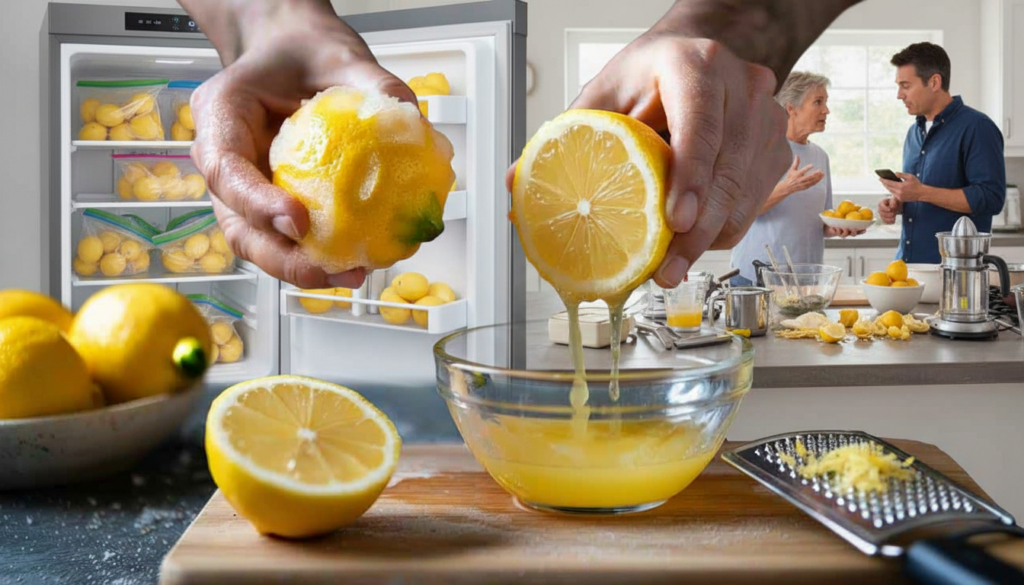
The first surprise hits when you pull a frozen lemon from the freezer. It doesn’t feel like fruit anymore; it feels like a bright yellow pebble. The skin is frosty, the scent faint but still present. Slice into it, and the texture is completely different. The knife glides through more like it’s cutting frozen dessert than citrus.

That shift in texture is the real reason people swear by the “extra juice” effect. Once thawed, the pulp turns soft and almost slushy. Instead of politely dripping, the juice rushes out. The inner membranes break down faster, and the segments collapse with minimal pressure.

A friend once tried it after forgetting to buy fresh lemons before hosting brunch. She froze the leftover ones overnight, expecting nothing special. The next morning, she thawed one under warm water, cut it open, and was stunned. The inside looked almost sauce-like. Compared side by side with a fresh lemon, the thawed one released noticeably more liquid with far less effort.
It’s not magic—it’s physics. Freezing forms ice crystals inside the fruit, which puncture the cell walls. When the lemon thaws, those weakened cells release juice more freely. You’re not creating extra juice; you’re simply extracting more of what was already trapped inside.
How to Freeze Lemons Properly and Use Them Smartly
The method itself couldn’t be simpler. Rinse your lemons, dry them thoroughly, and place them whole into a freezer-safe bag or airtight container. Remove as much air as possible before sealing. Then leave them overnight in the coldest part of the freezer.
When ready to use one, decide your purpose. For zest, grate it directly from frozen—the peel turns into light, fluffy citrus snow that works beautifully over pasta, salads, fish, or desserts. For juice, allow it to thaw at room temperature for about 20–30 minutes, or speed things up under warm running water.
Trying to squeeze it rock-solid won’t work. A fully frozen lemon is stubborn. Partial thawing is key.

Storage also matters. Tossing lemons loosely onto a freezer shelf can dry them out or cause them to absorb freezer odors. A sealed bag prevents that issue and keeps texture more consistent.
One chef admitted he never freezes lemons at his restaurant—but at home, he does it often. Any lemon lingering in the fridge gets one last chance in the freezer before being discarded.
Brilliant Hack or Just Another Trend?
The real intrigue isn’t just the technique—it’s the reaction it triggers. Some cooks love efficiency. They enjoy reducing waste and squeezing maximum value from every ingredient. For them, frozen lemons feel practical and empowering.
Others prefer the crisp snap and fresh fragrance of a room-temperature lemon. Freezing slightly changes the aroma and can soften the sharp brightness. That difference matters to purists who care about subtle flavor layers.
The truth sits somewhere in between. Freezing won’t transform a mediocre lemon into something extraordinary. It won’t replace the vibrant mist of oils released from freshly sliced citrus. But it does offer flexibility. It ensures you always have zest and juice available for dressings, marinades, teas, or baking—even if you haven’t been grocery shopping.

Ultimately, it comes down to preference. Some people freeze a dozen lemons and never go back. Others try it once, shrug, and return to fresh citrus. Either way, it’s fascinating how one simple fruit managed to divide kitchens everywhere.

| Key point | Detail | Value for the reader |
|---|---|---|
| Freeze whole lemons | Store in bags or containers, zest from frozen, thaw to juice | Always have citrus ready, less waste, easier prep |
| Texture change | Ice crystals break cell walls, pulp softens | Juice releases more easily, closer to full extraction |
| Different use cases | Frozen lemons shine in baking, marinades, drinks | Better flavor in everyday dishes with minimal effort |