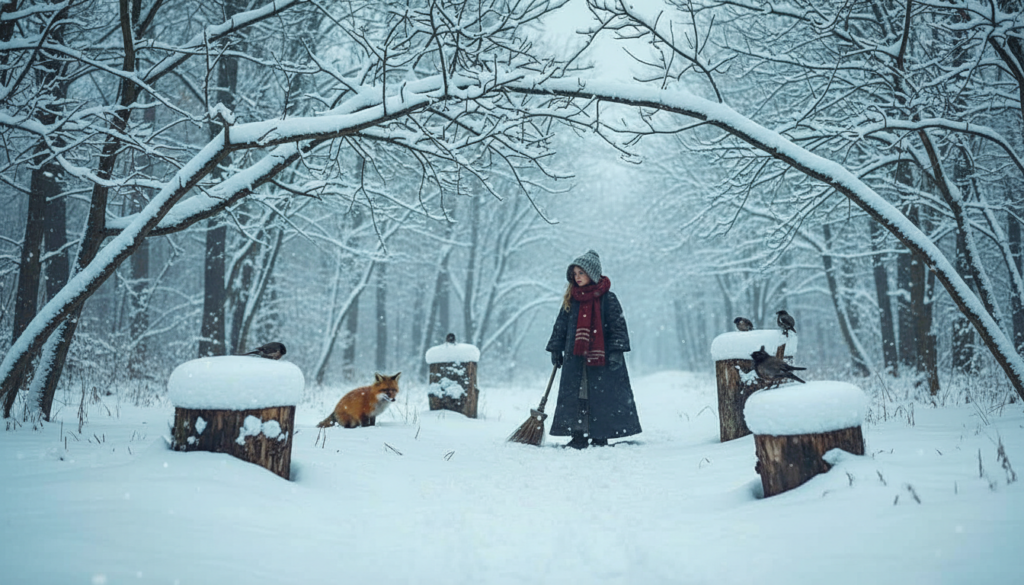
Birds in our gardens are quietly fighting for food and shelter every day while we rush from the car to the front door. An old household broom that you may have forgotten about and left in your shed could be one of the easiest ways to help them this winter.
How a broom that was left behind becomes a lifeline
A broom that has been left outside on a cold January morning doesn’t look like a tool for rescuing animals. But for hungry finches, robins, and sparrows, its tangled bristles can be a place to eat, a place to watch, and a place to hide all at the same time.
Birds use up more energy to stay warm when it’s cold outside. They need food with a lot of calories, but they also need safe places to eat where they don’t have to waste energy running away from predators or the cold winds. A broom, oddly enough, checks off a few of those boxes.

A simple broom can be turned into a raised, sheltered “feeding bush” right where birds need it most.

The thick bristles on the head look like a small bush. Birds can hang onto the fibres, pick at food that is stuck between them, and go inside the tangle when a cat or hawk walks by. You are turning something you already own into a rough-and-ready survival station instead of buying another plastic feeder.
Making a winter bird station out of your old broom
You don’t need to know how to use power tools or do carpentry. The goal is to get the broom off the ground, tie it down, and use its shape to hold a variety of foods.
Set up step by step
Pick the right broom: A stiff outdoor broom or an old yard brush with natural or synthetic bristles will both work.
Look for a safe place: Choose a spot that is at least a few meters away from where cats hide and close to bushes or a hedge, but not too close to busy paths.
Make sure it stays put by wedging the handle into a hedge, tying it to a fence post, or hanging it from a strong branch.
Put food in the bristles: Push seeds, nuts or suet pellets between the fibres so they don’t fall out when the bird pecks.
Hang extras: Use string or garden wire to hang fat balls, half apples, or bunches of raisins from the head of the broom.
Keeping the broom up off the ground keeps food dry, keeps mice and rats away, and makes it less likely that it will be buried under new snow.
A broom head is like a small shelf and thicket in one. Birds hold onto the bristles, eat, and then slide deeper inside to hide.
Why this strange hack works so well for birds
Protection from the wind and watchful eyes
It’s not just about calories when it comes to feeding in the winter. Birds need to know they can get away quickly. The bristle “forest” gives them places to sit at different heights and look at the sky and ground from many different angles.
The broom also gives some cover at the same time. A bird perched on a tray feeder is easier to see than one that is hidden among dark bristles and dangling food.
Warm pockets and less energy wasted
On calm days, the thick bristle mass slows down the wind and can make small areas a little warmer. It won’t heat birds like a radiator, but it will make them feel less cold while they eat.
The less energy they waste on short flights, the closer they can feed to shelter. That could mean the difference between living and dying during a long freeze.
Good options for a broom feeder
Fat balls or suet blocks (without plastic mesh, which can get stuck in legs and beaks).
Sunflower hearts or a mix of seeds pushed into the bristles in small groups.
Peanuts without salt, either in small pieces or in a wire peanut feeder that is tied to the handle.
Apple slices and pear cores, either on skewers or tied with string.
Blackbirds and thrushes like to eat soaked raisins or sultanas.

Things you shouldn’t eat
Bacon rind or salted nuts are examples of salty foods.
Food that is mouldy or past its prime can make you sick.
Fat mixed with cooking juices can smear feathers and make them less warm.
Big pieces of dry bread that swell up in the stomach and don’t give you much nutrition.
The goal is to get steady, reliable calories, not a buffet of trash. Known bird foods that are easy to get work best on a broom feeder.
Other tools you forgot about that you can use again
When you use an old broom, other things you don’t need in the garden start to look different. You can put apple slices between the tines of a broken rake. If you break the handle of a shovel, you can use it as a support post for a tray feeder. A wooden ladder that is no longer used and is laid flat in a hedge makes different levels of perches for different species.
These makeshift buildings do two things at once: they cut down on waste and make a small garden look more three-dimensional. There is less competition for food in a harsh season when there are more perches, hideouts, and feeding stations.
How this small act affects your garden.
Feeding birds makes more than just the usual flurry of wings happen. The birds you are helping survive the winter eat a lot of garden pests, like aphids and caterpillars. By keeping their numbers up during the cold months, you are quietly getting people to join you in the spring and summer.
Kids often connect with animals that are easy to see first. A broom with darting tits and cheeky robins on it becomes an outdoor screen for them to watch instead of a tablet. Writing down which species visit and when in a simple notebook can become a nice family tradition that lasts all winter.
Some extra things to know about risks and tips
Hygiene and consistency are two words that come up a lot in bird care advice. Birds that are crowded together on the same perch can get sick from dirty feeding areas. If you make a broom feeder, shake out the old food every few days and clean the handle and nearby surfaces of bird droppings.
Birds depend on reliable food sources once they find them, so consistency is important. If you stop suddenly in the middle of a long freeze, they might have to scramble. If you know you’ll be gone for a while, put out some foods that last longer, like fat balls, before you leave. You could also ask a neighbour to fill up the broom station once or twice.
There is also the issue of predators. A broom feeder shouldn’t be right next to thick cover where a cat can jump out without being seen. Try to find a middle ground: close enough to a tree or hedge for birds to hide, but not so close that a stalker can get to the broom in one jump.
Think about a week of heavy snow in late February, when all the natural berries have been picked and the grass is as hard as concrete. A robin sees your broom feeder and pecks at the suet that is stuck in the bristles. Then it disappears into the tangle as a shadow moves above it. That little bit of safety and energy could help it make it to the first worms of spring.

If you make that picture real, your old broom will no longer be a mess; instead, it will be a quiet piece of winter infrastructure for the animals outside your back door.