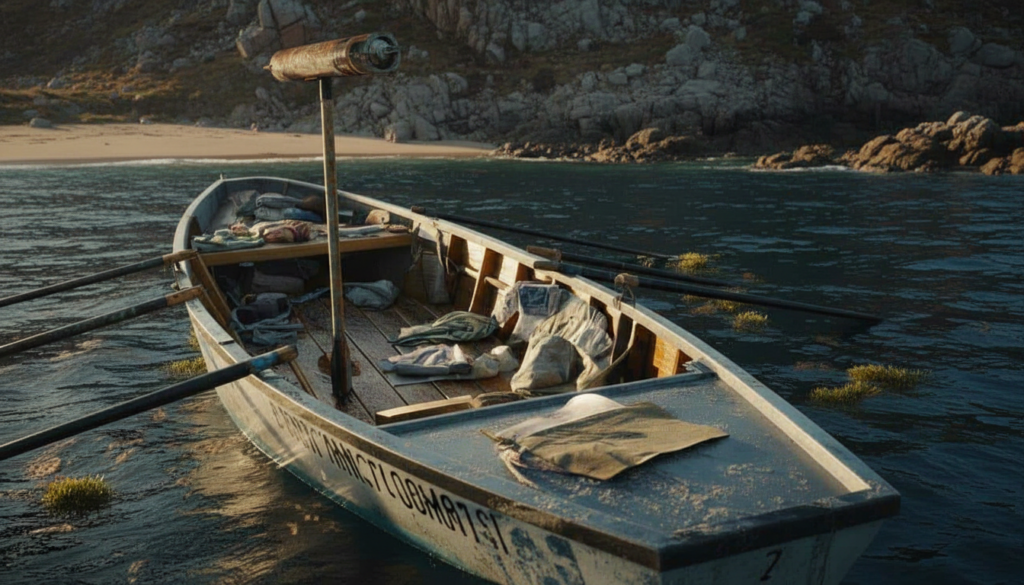
There was no name on the hull, no new scrape marks, and no sign that anyone had leaned over the side to get help. A sun-bleached boat was floating in a soft Atlantic swell, half-sunk, as if it had given up a long time ago. The fishermen made one circle, with their engines low and radios crackling in the background. Someone on deck said it felt like walking into a crime scene without a body. Inside, there were food packets that had been preserved by salt, a broken oar, and high-tech gear that had been eaten by rust. Everyone who saw the faded stickers on the side thought of one word: “TRANSATLANTIC.”
A boat from the past comes back
Three years ago, that same rowboat left the coast with one person rowing and a lot of hope, sponsors, and neatly taped motivational quotes on the walls of the cabin. It floated alone today, thousands of miles from where it started and far from where it should have been. No flags. No flares. A satellite tracker mount was just hanging there like a broken antenna on a toy that no one remembers. The sea had taken the color out of the boat, but not its story. The GPS tag still on the cockpit told rescuers exactly what they had found: a long-lost transatlantic mission that was quietly looping back into our feeds.
A small trawler working a regular route made the discovery, the kind of fishing day that no one expects to go viral. The crew first thought it was just another abandoned dinghy or a liferaft that had come loose from a cargo ship. Then someone saw the narrow rowing seat and the carbon fiber oars still tied to the deck. Once they were back on land, they started searching for the boat’s name on Google and quickly found old news stories and a fundraising page they had almost forgotten about. It hurt to see pictures of a happy athlete standing next to the same hull, which was bright and new, next to the bent wreck that was now tied to their stern. Three years of wind and waves had given it a second life, this time as a mystery.

The story got clearer once the Coast Guard confirmed the serial numbers. This was the rowboat that people thought was lost after an emergency on board and a rescue in the middle of the ocean. The rower lived, but the boat was cut loose in rough seas. A ship picked him up and took him to shore. At the time, tracking showed that it was drifting into the open Atlantic like any other piece of trash in the ocean. Then the signals stopped, interest waned, and the world kept scrolling. But the ocean doesn’t scroll. It only moves. It slowly and quietly carried that empty capsule through storms, currents, and seasons until it showed up again in front of a few shocked fishermen who suddenly found themselves holding a headline.
How a 7-meter shell makes it through the Atlantic
Rowboats made for crossing the ocean are strange mixes of survival pods, racing shells, and floating bunkers. Compared to yachts, they’re short, usually only 7 to 8 meters long, but they have watertight compartments and hulls that can right themselves. They are made so that they won’t sink easily, even when they are empty. That design is what made this boat a long-term drifter instead of a wreck that only lasted a short time. After the person left, the boat was just an object that was pushed and pulled by the wind and current, following the rules of physics instead of plans. It kept going because no one was there to stop it.
Marine scientists who have followed lost buoys say that these survival stories aren’t uncommon, but they are hard to find. The Gulf Stream and North Atlantic Drift are two strong currents that connect the North Atlantic. These currents can move things that are floating thousands of kilometers. A lost rowboat is heavier than a plastic crate but lighter than most fishing debris, so it floats on the surface of the water. That means storms push it one way for a while, steady trade winds push it the other way, and the boat slowly makes its way across the map. It looks almost like it was planned when you look at it from a satellite, as if an eccentric, invisible captain is steering by whim.
Modern expedition gear is also very tough. Fiberglass and carbon fiber don’t rot like the wood in old boats did. Epoxy coatings stick around long after paint has come off. Solar panels break, but they stay attached to their mounts. Algae film builds up, but it doesn’t sink the hull. This kind of boat is like a floating time capsule that won’t break down easily. That’s great for safety when someone is rowing. If no one claims it, those same strengths will make it a permanent guest in an ocean that is already full of things we’ve left behind and forgotten.
What this moving shell says about us
One useful thing that comes to mind is that if you want to send a ship across an ocean, you need to have a clear plan for what will happen after it gets there. That now means properly registering the boat, putting multiple tags on it, and logging its voyage profile with maritime authorities for serious expeditions. It also means writing down the steps for rescuing someone from the beginning, including who to call, what to do with the boat if the rower has to ditch, and how long signals should stay active. That’s not just red tape; it’s what makes a ghost story into a puzzle that can be solved instead of just a scary piece of ocean trash.
A lot of adventurers and weekend sailors skip these details because they seem far away and too much for an experience that should be raw and free. We’ve all been there, when excitement gets ahead of the paperwork. Let’s be honest: no one really follows every safety rule like a monk before leaving shore. But when a boat goes missing, those little choices become very important—to rescuers, to families, and even to people who might find the boat years later and wonder if it’s a grave marker or just an expensive piece of junk.
One of the fishermen told local radio, “When we saw the inside, it felt like walking into somebody’s paused life.” “There were pictures taped to the wall, a notebook with pages that had been warped by salt, and a pair of rowing gloves that were still hanging on a hook. You could almost see the person who had been there, but then you remembered they weren’t.
- Clearly write down your contact information and registration number on your vessel so that anyone who finds it can quickly learn its story.
- At least one independent tracking device should be able to keep pinging for months, even when the power goes out.
- Before you leave, make sure everyone agrees on an abandonment protocol. This includes who will be told, what public notes will go online, and when.
- Put a simple “boat biography” in a waterproof pouch on board. It should explain the mission and what happened.
- Plan ahead for the costs and logistics of getting your dream boat back so it doesn’t become a problem for someone else.
The strange life after an adventure
This old rowboat that was found again is in that weird space between a poetic symbol and plain trash. When you look at it up close, it’s just a beat-up hull that will cost money to move, store, or maybe even scrap. It’s a different story online: a cool story about luck, endurance, and how strange the ocean’s memory is. Every picture of its broken cabin and barnacled rudder makes me think the same thing: how many other things are out there that are still telling stories we stopped listening to years ago?

Important point: The boat stayed afloat for three years because of how it was built and the materials used.Demonstrates how contemporary adventure equipment alters the persistence of objects in the ocean.
— Clear labels, trackers, and plans for what to do with abandoned boats make “ghost boats” easy to find.Gives useful tips on how to avoid leaving behind a confusing or dangerous legacy at sea.
— The story is like a lot of other things we put out into the world and then forget about.Encourages readers to think about their own risks, responsibilities, and projects.
Questions and Answers:
Question 1: Was the rower still alive when the boat was first left behind?
Yes. Reports about the recovered hull say that the solo rower was saved during the first attempt to cross the Atlantic after an emergency on board. The boat was then left adrift while the rower was safely brought to shore.
Question 2: How can a little rowboat last three years in the Atlantic?
Ocean rowing boats have hulls that right themselves, cabins that are watertight, and strong composite materials. When they are sealed, they act like strong buoys. They may get partially flooded, but they won’t sink and can float for years on wind and currents.
Question 3: Isn’t an abandoned boat a type of marine pollution?
Yes, a lot of the time. Authorities can treat a vessel as trash if no one is responsible for it and it is a danger to navigation or the environment. That’s why some agencies want clearer rules about adventure craft and how to handle them when their mission is over.
Question 4: Was it possible to track the boat the whole time?
Only if its tracking systems stayed on and working. When batteries die or antennas break, a lot of devices stop working. Some expeditions now use long-life satellite beacons that work on their own power to make that window much longer.

Question 5: What will happen to the boat now that it has been found?
Usually, maritime authorities get in touch with the owner or insurer, check to see if the hull is safe to tow or salvage, and then choose between recovery, repurposing, or dismantling. When people are interested, parts of the boat sometimes end up in museums or shows as real-life examples of modern exploration history.