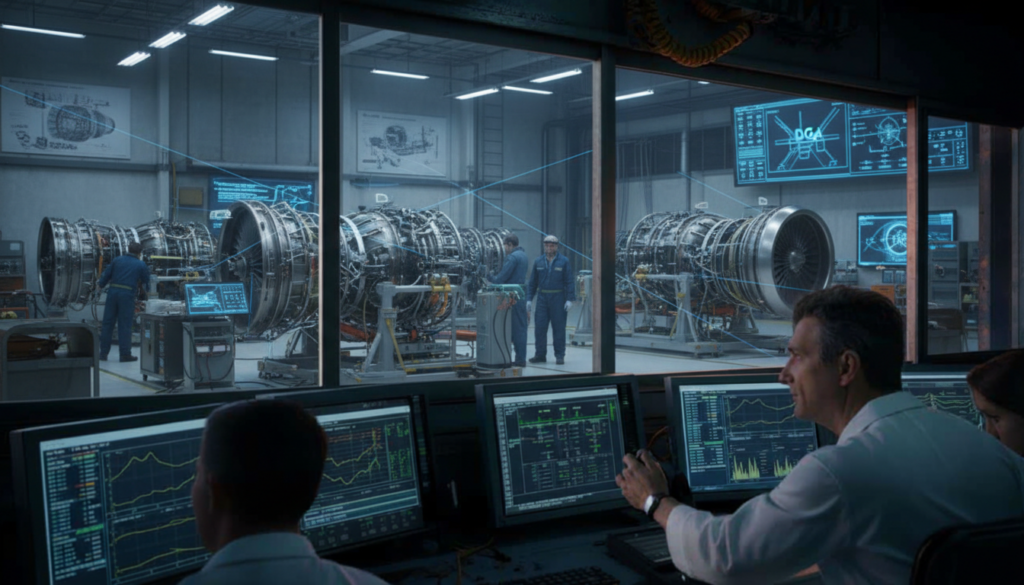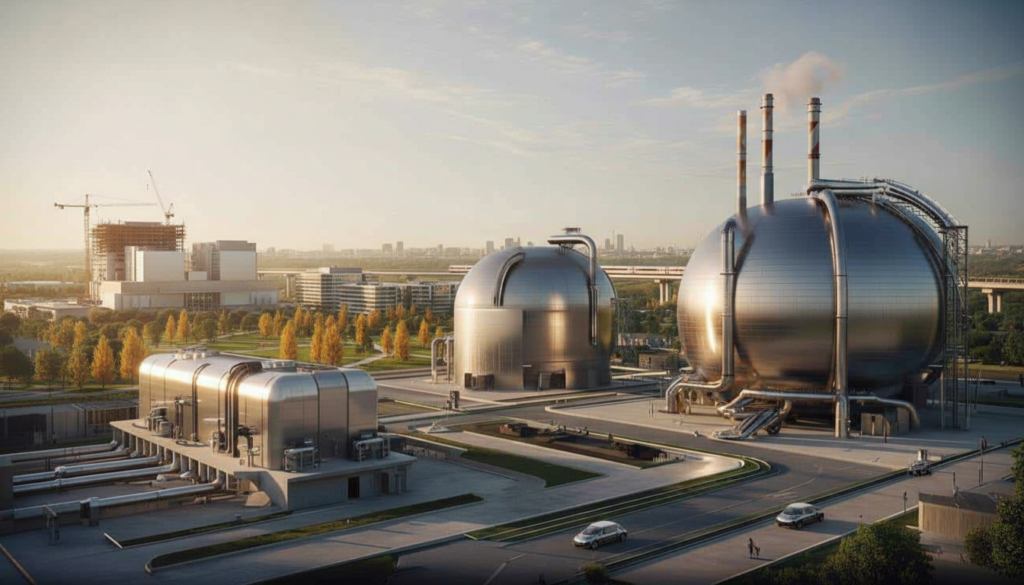
In just a few weeks, three ambitious nuclear start-ups have made big progress with France’s nuclear safety and radiation protection authority. This marks the start of a new phase in which small modular reactors, advanced fuels, and industrial heat are no longer just ideas but real projects that are being looked at by the government.
Three challengers, one signal: French nuclear is starting over.
Since the end of 2025, France’s nuclear ecosystem has changed. The country still depends a lot on its old fleet of big reactors, but a new group of players is now knocking on the regulator’s door.
The Autorité de sûreté nucléaire et de radioprotection (ASNR) is the French government agency in charge of nuclear safety. Newcleo, Stellaria, and Jimmy Energy have all sent important papers to them.
Three different companies are trying to get three different advanced reactor designs approved by the French government at almost the same time for the first time.

Their methods are different, but they all point to the same trend: France wants to stay a nuclear power while updating its technology, business models, and industrial uses.
What the filings really mean
The three companies are not all at the same point in the regulatory process.
Newcleo has sent in a voluntary nuclear safety plan for its design of a lead-cooled fast reactor.
Stellaria has filed a full Creation Authorization Request (DAC in French), which is the first step in becoming a nuclear operator.
Jimmy Energy has also submitted a DAC for its microreactor that makes industrial heat.
Newcleo has submitted a safety program, but that does not give them the right to build. Instead, it starts in-depth technical talks with the regulator while the design is still open to change.
A DAC goes a lot further. It fixes the design, makes the company show that the design is safe, and moves it into the group of nuclear operators who are fully responsible under the law.
In terms of regulations, the DAC is the point at which a reactor idea stops being a slide deck and starts being a design that must be followed by law.
Newcleo: lead-cooled fast reactors are back on the table
A Franco-Italian start-up with a lot of support
Stefano Buono, a nuclear physicist known for his work at CERN, started Newcleo in 2021. The company’s main office is in Paris, France, and it has offices in Italy and France. Its mission sounds almost old-fashioned: to bring back fast reactors, but to change them to fit today’s industrial, regulatory, and social needs.
Newcleo has already raised more than €500 million from European investors, which is a lot of money for a new nuclear company in Europe. The money helps pay for work on two lead-cooled fast reactor models, the LFR-AS-30 and the bigger LFR-AS-200, as well as an advanced fuel plant and a big research and development program in Italy.
How a fast reactor with lead cooling works
The reactor that Newcleo is being watched by regulators is part of the “generation IV” family. It uses fast neutrons and a coolant made of liquid lead instead of water.
Lead has a lot of benefits. It can hold a lot of heat without boiling because it has a very high boiling point and a lot of thermal inertia. It also supports passive cooling methods, which let the reactor lose heat through natural circulation instead of only using powered pumps.
Those features are what the company uses to tell the ASNR about safety. The file talks about how the reactor works when things go wrong, how it gets rid of leftover heat after it shuts down, and how the core reacts to bad situations, from small problems to very rare but serious ones.
Newcleo wants to combine the ability to recycle spent fuel with the ability to produce electricity in a way that can be controlled. This will lower the amount of waste and its toxicity over time.
Fuel plant, jobs, and an industrial footprint in France
Newcleo’s plan goes beyond the reactor. The company sent in a safety plan for an advanced fuel fabrication facility in late 2024. This facility would be able to process recycled materials, including very radioactive waste streams.
The two tracks are very closely related. The fuel plant and the reactor are supposed to work together to create a closed loop where used fuel from big reactors powers the new fast systems. The ASNR is looking at both parts at the same time to give the French government a complete picture before the target DAC submission in 2027.
Plans are already being put into action on the ground. Newcleo is backing a project to build a MOX fuel plant in the Aube department. The land sale has been approved, and the project is expected to cost around €1.8 billion and create about 1,700 direct jobs.
Newcleo is also working on a modular reactor project at the Chinon site, which is set to go live around 2031, but only after public consultation and meeting regulatory deadlines.
Not just simulations, but real data
The company does a lot of experimental research at Italy’s ENEA Brasimone Research Center, which is behind all the paperwork. There are sixteen test facilities there that are either already in use or being built to look at how coolants work, how heat moves, and how materials work in lead environments.
Those tests either prove or disprove the models used in the French safety files. When it comes to nuclear licensing, that kind of physical evidence is very important, especially when suggesting a technology that isn’t well known.
Precursor: a dress rehearsal that doesn’t involve nuclear weapons
Newcleo is also working on Precursor, a 10 MW thermal, 3 MW electrical model of its reactor that doesn’t use nuclear fuel. The goal is to test pumps, heat exchangers, control systems, and power conversion equipment on a large scale, but without any restrictions on radiation.
It is expected that Precursor will start working by the end of 2026. The lessons learned from this platform will help with final design decisions and make the safety case filed with the ASNR stronger.

France as a market and a regulator to look up to
Newcleo thinks of the French review as a model. If its idea passes muster with one of Europe’s strictest nuclear regulators, that could help it get used in other countries in the future.
In 2026, the Commission nationale du débat public will hold a formal public debate about the project. In France, this process is required for big nuclear projects. It will give local communities, NGOs, unions, and businesses a way to challenge, support, or change the proposal in an organized way.
Two very different SMR bets: Stellaria and Jimmy
Newcleo is not the only one. Stellaria and Jimmy Energy are both working on small modular reactors (SMRs) and, in some cases, advanced modular reactors (AMRs), but they are going after different markets and technologies.
Alvin from Stellaria: molten salt and high heat
Alvin is the name of Stellaria’s project. It is a fast reactor that uses molten salts as a coolant. It runs at a high temperature without high-pressure water systems, which is different from traditional water-cooled units. The salt’s chemistry is an important part of its safety design, which keeps certain accident scenarios stable on purpose.
Alvin is meant to be a fourth-generation building block that can make both electricity and high-quality industrial heat at power levels in the tens of megawatts. Stellaria hopes to have a prototype ready by 2030, as long as they can get the right licenses and money.
Jimmy Energy: small reactors for industrial boilers
Jimmy Energy is more focused. It has a small, modular JIMMY reactor that cools with helium and only produces a few megawatts of thermal power. It is not meant to change the way national grids work; instead, it is meant to replace fossil fuel boilers in industries like chemicals, food processing, and paper.
Jimmy wants faster licensing, faster deployment, and easier integration by keeping power levels low and applications narrow. This is especially true on brownfield industrial sites that already have energy infrastructure and skilled workers.
How the three projects compare
Although all three companies operate in the same country, they target different roles in a low‑carbon system.
| Company | Reactor name | Technology | Coolant | Power target | Main use | Timeline |
|---|---|---|---|---|---|---|
| Stellaria | Alvin | Fast reactor | Molten salts | Dozens of MW | Electricity and industrial heat | Prototype around 2030 |
| Jimmy Energy | JIMMY | Micro modular reactor | Helium gas | Few MW thermal | Decarbonised industrial heat | Gradual deployment from late 2020s |
| Newcleo | LFR-AS-30 / LFR-AS-200 | Fast reactor | Liquid lead | 30 MW then 200 MW | Dispatchable power and fuel recycling | Early 2030s for first units |
The term “golden age” for France comes more from the variety and speed of these advanced designs than from how many new ones they made.
Why France is betting on advanced nuclear now
About two-thirds of France’s electricity comes from nuclear power. The new wave isn’t about starting over; it’s about not getting stuck.
Several things are coming together:
- Old reactors that need to be replaced in the next 20 to 30 years.
- EU climate goals that push coal and gas out of power and industrial heat.
- Concerns about energy security after gas prices went up and tensions between countries.
- There is pressure to deal with nuclear waste in a smarter way than just storing it.
Some of these problems could be solved by fast reactors, molten-salt designs, and microreactors. For example, they could use fuel more efficiently, give factories more options for burning waste, and allow factories to be built in more flexible locations.
What could go wrong, what the risks and benefits are
There are real technological and political risks that come with advanced nuclear. New coolant systems, like lead or molten salts, need new materials and people who know how to use them. Corrosion of components, the chemistry of coolants, and maintenance in tough conditions are still areas of active research.
Regulatory fatigue is also a problem. The ASNR has to keep an eye on existing plants while also looking at new, complicated designs. Delays could make things take longer and cost more, which would test investors’ patience and the public’s trust.
On the other hand, a successful rollout would have many benefits, such as low-carbon electricity that can work with renewables, reliable industrial heat that doesn’t use fossil fuels, and new jobs in engineering, construction, and fuel-cycle services.
There may also be changes in how we deal with waste. If fast reactors like Newcleo’s reach maturity, they could use up some of the spent fuel that is already in storage. This would reduce the amount of highly radioactive materials that need to be stored in the ground and make them last longer.
Important ideas behind the news
What is an SMR or an AMR?
Small modular reactors are made in small parts, often in factories, and then sent to the site where they will be used. Instead of building huge, one-of-a-kind power plants, they want to lower the risk of construction by using standard and repeatable designs.
Advanced modular reactors take things a step further by using new coolants, fuels, or neutron spectra that aren’t used in today’s most common light-water designs. This can allow for higher temperatures in industry or better fuel use, but it also makes licensing and engineering more difficult.
A possible future for France
Picture France in the middle of the 2030s. A few big new EPR2 reactors share the grid with groups of SMRs on industrial sites. Microreactors like JIMMY are inside chemical plants and replace gas boilers. Heavy industry gets both power and very hot steam from Alvin-type units. Newcleo’s fast reactors quietly process recycled fuel, which cuts down on the amount of long-lived waste.
That situation is still up in the air, and a lot of projects will miss their deadlines or fail. But the three filings with the ASNR show that France is not just talking about these kinds of futures. It has begun the long, detailed, and often boring work that will make or break them.