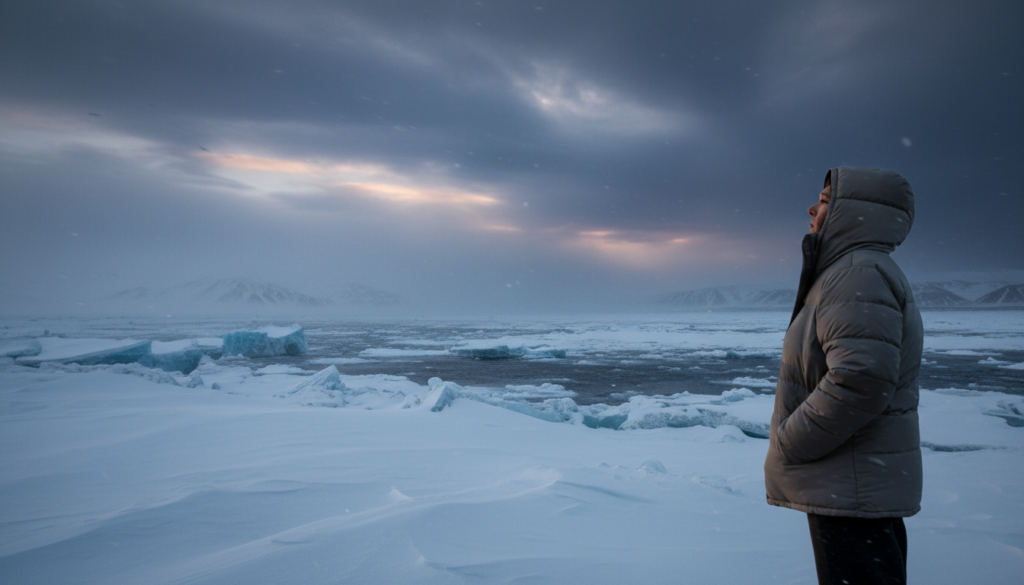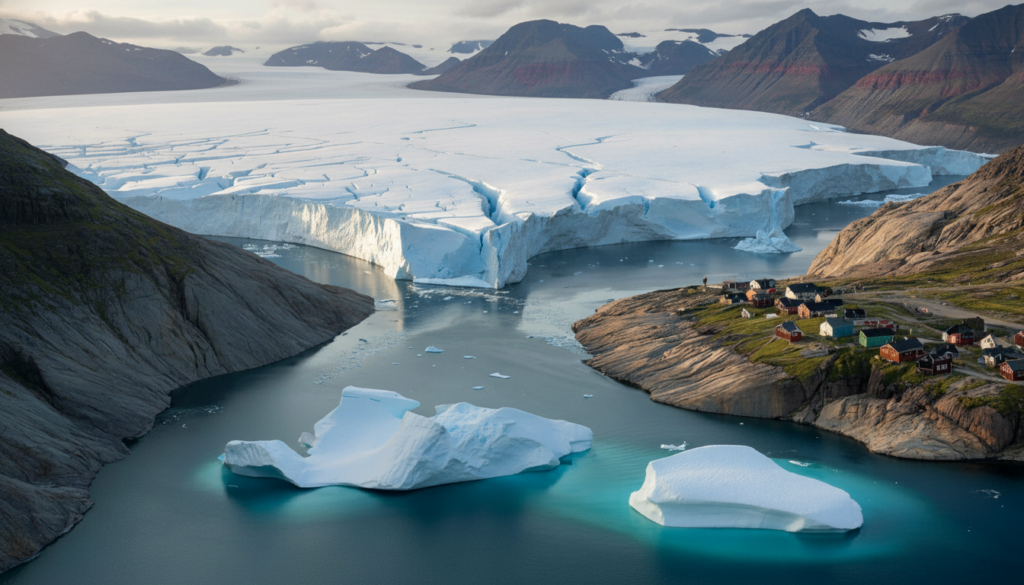
When the pilot dips the wing of the plane, the world below looks almost fake. Greenland looks like a broken plate of white porcelain with blue meltwater running through it and jagged black rock around the edges. The island looks like it will never end from the window, like something time forgot to finish.
Then your eyes get used to it. You see rivers making new paths through the ice. You can see bare ground where old maps show snow. You remember the news stories about “record melt” and “vanishing ice sheet.” The whole scene goes from awe to quiet worry.
Greenland is not just another cold, faraway place.

It is unique in terms of geology, but that uniqueness is starting to hurt it.

The island that doesn’t follow the rules of Earth
Greenland looks like a big white shield sitting nicely on top of rock on most maps. The truth is stranger. A lot of the island looks like a stone bowl, and its bedrock is hidden under more than two kilometres of ice, which is very deep below sea level. Over millions of years, the weight of that ice has pushed the crust down, like a big thumb pushing into bread dough.
So, the ice sheet in Greenland isn’t just sitting on land. In many places, it has sunk into a basin that is half-full of water, with mountains and fjords on the sides that act like broken walls in a leaky dam.
You can really feel this strange geography on the west coast, close to places like Ilulissat. There, huge glaciers slowly slide from the island’s high, sunken center toward the ocean through steep rock canyons that are very narrow. At the mouth of the fjord, icebergs the size of houses roll and crack as they float past colourful wooden homes and kids on bikes who hardly look up anymore.
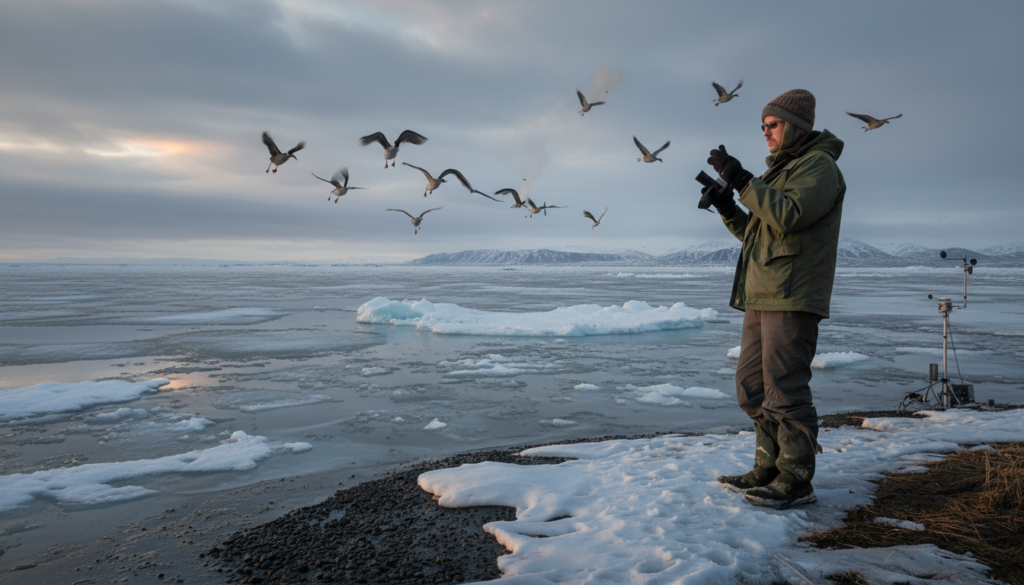
Scientists use GPS, satellites, and drones to keep an eye on those glaciers. The speed of some outlet glaciers has doubled in just a few decades. Jakobshavn, one of them, used to be known as “the world’s fastest glacier.” It’s now one of the scariest climate barometers in the world.
The geology that looks like a bowl makes a trap. As the climate warms, more ice on the surface melts, and water flows down through cracks, making the base of the ice sheet slippery. The ice moves faster toward the shore. Warm ocean water flows up long, narrow fjords and cuts into the glacier fronts from below.
Because there is so much bedrock below sea level, the ice behind the “dam” doesn’t just melt from the top when it weakens. It can fall over sideways and move back inland along that hidden basin. The basin gets deeper and the remaining ice gets weaker as it moves away. That’s the bad feedback loop that comes with Greenland’s one-of-a-kind shape.
Why Greenland’s geology makes melting a problem for the whole world
Begin with something real, like the rise in sea level. If all of Greenland’s ice melted, the oceans would rise by about seven meters. No scientist thinks this will happen this century, but even a small part of it could change coastlines and flood cities we all know by name. Because Greenland’s bedrock is sinking and there are deep basins, some parts of the ice sheet are much more likely to suddenly melt than the simple maps show.
A small change in a fjord. One glacier front is falling apart a little faster. And all of a sudden, more of the basin is open to ocean heat than scientists thought it would be twenty years ago.
The northeast Greenland ice stream is a good example. It’s a huge conveyor belt of ice that flows into the ocean through a few important glaciers. For a long time, scientists thought this area was pretty stable because the ice was stuck to the bedrock by a “grounding line.” Then, detailed radar mapping showed a hidden trough, a long depression that goes deep inland and is deeper than expected.
The grounding line can move back along the trough once warm water gets there. That’s not just a matter of academic interest. It means that a part of Greenland we thought was “safe for now” might really be a time bomb with a long fuse.
This unique geology also changes the way gravity works. The huge ice sheet in Greenland pulls ocean water toward it, which is a small but real pull. That pull of gravity gets weaker as the ice melts, and the water moves away. Strangely, this means that the sea level is actually a little lower right next to Greenland and a lot higher thousands of kilometres away, in places like New York, Lagos, or Mumbai.

A stream of meltwater gurgling through a crevasse above Nuuk is not just a local story. It’s part of a worldwide redistribution of water and risk, which is wired through physics that we didn’t fully understand until satellites started measuring very small changes in the Earth’s gravity field.
Living in a place where the landscape is always changing
This isn’t a far-off research puzzle for people in Greenland. You can feel it under your feet. In some coastal towns, the ground is literally sagging because the permafrost is melting. This is causing roads to crack and buildings to lean at strange angles. Fishermen talk about new areas of open water where the thick sea ice used to stay solid until spring when they were kids. Every year, hunters change their routes because the old ones over frozen fjords are no longer reliable.
People in the area use one “method” that sounds easy: always being on the lookout. You look at the ice. You ask people. You see how early the river broke this year.
For the outside world, one practical gesture is less romantic: really paying attention to data that sounds boring. The boring stuff: satellite altimetry, GPS measurements of bedrock rebound, and ocean temperature profiles in narrow Greenland fjords. These tools tell us if a glacier is about to reach a tipping point or if it’s just having a bad melt season.
Let’s be honest: no one really reads IPCC annexe tables while drinking coffee in the morning. But that’s where the signals first show up, years before pictures of ice cliffs falling apart go viral.
Scientists who study Greenland often talk about a certain mix of awe and fear. During a late-night video call from Kangerlussuaq, one glaciologist told me:
“I fell in love with Greenland because it seemed like it would never change. I can see the difference every time I go back now. And I know that what happens here will have effects elsewhere.
They keep track of a few important warning signs in their notebooks and on their hard drives:
The uncomfortable truth is that we still don’t give Greenland enough credit.
It’s hard to accept that Greenland’s geology isn’t there to comfort us. We like stories that are easy to follow. Either the ice melts slowly and predictably, or it falls apart overnight in a disaster like in a movie. The real world is messier. This stone bowl, these hidden troughs, and these strange effects of gravity all work together to make a climate wild card that doesn’t fit into our mental folders.
We’ve all had that moment when we realised that what we thought was solid ground was really moving slowly.
There is also a quiet wrongness in this story. Most people in Greenland did almost nothing to cause the emissions that are melting the ice, but their home is literally changing shape because of decisions made far away. At the same time, millions of people who live on crowded, low-lying coasts have never been to the Arctic, but the way the rocks under an island they only know from maps and news alerts will affect their risk of flooding in the future.
That’s the strange closeness of climate physics: a crack opening in a remote glacier mouth can sound like water lapping against a city seawall over the course of decades.
Greenland makes us see the Earth as one big, complicated machine instead of a bunch of separate areas. The geology of this place makes our choices even more interesting. If you cut down on emissions, the ice sheet will still lose mass, but it will happen slowly, in inches and centimetres that we can work around. Keep burning, and those strange things about rock and gravity pull glaciers hard in the other direction, pushing them toward the faster retreats, the steeper paths, and the deeper basins.
This is not an easy ending. Greenland is a place where the long-term patterns of the Earth meet the short-term habits of a loud species. It is both a warning and a teacher. The real question is if we’ll pay attention to what the rock and ice are trying to tell us before they stop being quiet.