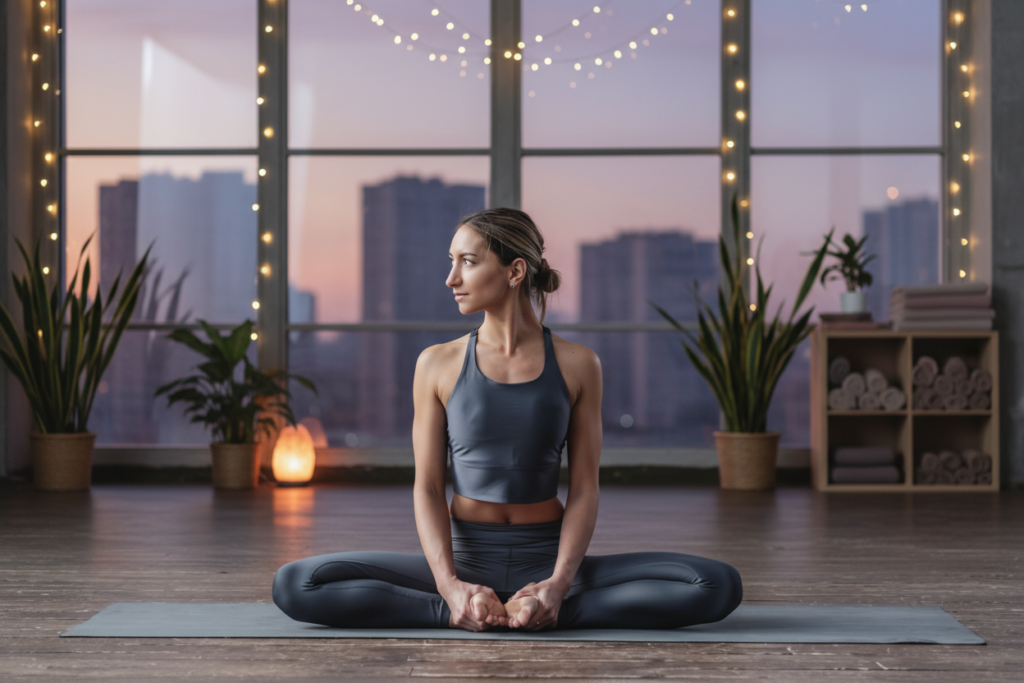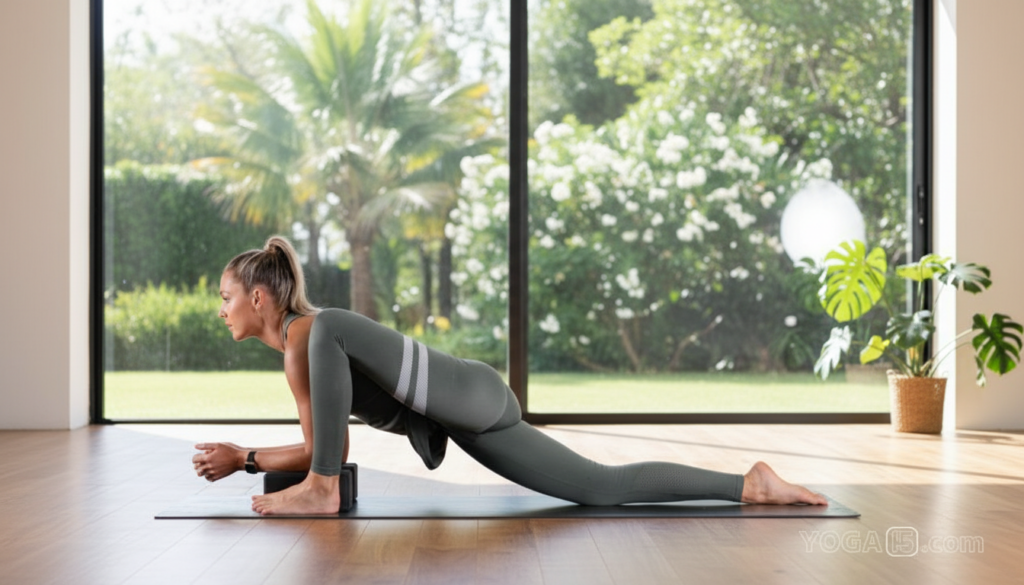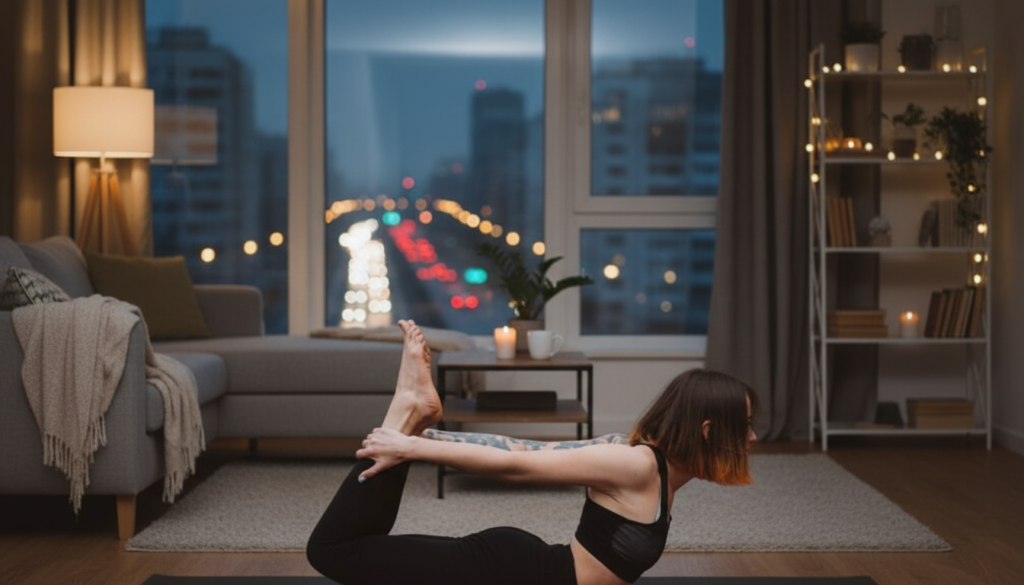
It can be hard to relax and let go of the stress that builds up in your body after a long day of commuting. Yoga is a great way to relax, stretch out tight muscles, and clear your mind. This article will show you six yoga poses that are great for relaxing after a long commute. These stretches and poses will help you feel more relaxed and refreshed, no matter how busy your day has been, whether you live in the UK or anywhere else.
1. Child’s Pose for Relaxation and Stretching
Child’s Pose, or Balasana, is a gentle and restorative yoga pose that is great for relieving stress after a long commute. This pose helps stretch the back, hips, and thighs, which helps release tension that has built up during the day. To do this pose, kneel on the floor, bring your chest down to your thighs, and stretch your arms out in front of you. As you breathe, let your body relax more and more into the pose. People say that Child’s Pose helps you relax deeply and lets your nervous system calm down. It also helps relax the muscles in the lower back, which is great for people who spend a lot of time sitting in traffic or on public transport.
2. Downward-Facing Dog to Get the Body Moving
Downward-Facing Dog, or Adho Mukha Svanasana, is one of the most popular yoga poses because it has so many benefits. It stretches the whole body, but it focuses on the hamstrings, calves, and spine. It also makes the arms and core stronger. This pose helps loosen up tight shoulders and backs after a long drive, and it also gives you energy. To do Downward-Facing Dog, start on your hands and knees and then lift your hips up and back so that your body makes an upside-down “V” shape. Your feet should be shoulder-width apart and your hands should be shoulder-width apart. While you hold the position, pay attention to lengthening the spine and pulling your heels toward the floor. This pose gives you a sense of “refreshing energy” and can help you fight off tiredness from sitting for long periods of time.
3. Seated Forward Fold to Help You Relax and Be More Flexible
The Seated Forward Fold, or Paschimottanasana, is a simple but effective yoga pose that helps relieve stress and tension in the lower body, especially in the hamstrings and lower back. This pose can be very helpful for people who feel stiff in their legs or back after a long drive. To do this pose, sit on the floor with your legs straight out in front of you. Breathe in to stretch your spine, then breathe out and gently bend forward, reaching for your feet. As you relax into the pose, focus on keeping your spine long and your body relaxed. This stretch helps you become more flexible and calm your mind after a long day.
Summary: Restorative Yoga for Stress Relief
Incorporating yoga into your post-commute routine can be a powerful way to unwind and relieve the physical and mental tension that builds up throughout the day. The poses we’ve discussed — Child’s Pose, Downward-Facing Dog, and Seated Forward Fold — are all excellent choices for stretching tight muscles, releasing stress, and restoring energy. You can feel more relaxed, flexible, and ready to face the challenges of the next day if you do these yoga poses often. Remember, yoga doesn’t require a lot of time or space, so it’s easy to practice in the comfort of your home after a long day of commuting.
| Yoga Pose | Main Benefits | Target Areas |
|---|---|---|
| Child’s Pose | Relaxation, stress relief | Back, hips, thighs |
| Downward-Facing Dog | Energizing, stretches the whole body | Hamstrings, calves, spine |
| Seated Forward Fold | Calms the mind, stretches lower body | Hamstrings, lower back |
| Cat-Cow Pose | Increases spine flexibility, relieves tension | Spine, neck, shoulders |
Frequently Asked Questions (FAQs)
1. How long should I stay in each yoga pose?
It’s recommended to hold each pose for 30 seconds to 1 minute, but listen to your body and adjust as needed.
2. Can yoga help with neck and shoulder pain from commuting?
Yes, yoga poses like Downward-Facing Dog and Child’s Pose can help relieve tension in the neck and shoulders.
3. Is it necessary to be flexible to do these yoga poses?
No, flexibility improves over time with consistent practice. Focus on comfort and gradual progress.
4. How often should I practice yoga to see benefits?
Practicing yoga 3-4 times a week can help you experience significant improvements in stress relief and flexibility.