Tuesday night at 9:17 p.m. You finally get comfortable on the couch with some leftovers on your lap when you see the curtains. They’re not really dirty, but they’re not really clean either. It smells a little stale and a little dull, like last month’s cooking and last year’s dust.
You think to yourself, “I really should take them down and clean them right.”
Then you remember the ladder in the basement, the hooks that don’t work right, the time it takes to dry, and the ironing. That’s a whole weekend gone. And this week, you’re already taking time away from sleep to respond to messages.
The curtains stay up, then. The room is still a little stuffy.

But what if they could feel new again, even though your life is still busy and a little crazy?
What if they never had to come down?

Why curtains feel “tired” long before they look dirty
You can almost smell the day that just happened when you walk into a room with closed windows and heavy curtains. Toast from breakfast, perfume from the morning rush, and a faint smell of last night’s dinner. Curtains are like soft walls that catch things that float by without making a sound.
At first, you don’t see it.
When you pull them back, you only feel that the air is heavier, the light is a little more yellow, and the fabric is less “alive.” A guest might not be able to put their finger on it, but they’ll know that this room is tired. And you know, deep down, that your curtains are more than just blocking out the sun.
One woman I talked to said her living room curtains “smelled like every winter we’ve ever had.” It had been three years since she last washed them. Not because she didn’t care, but because it felt like a small home renovation: moving furniture, taking down poles, and finding a place to dry ten meters of fabric.
After that, she bought a small handheld steamer for her clothes. She tried it on just one curtain panel, which was still hanging, on a Sunday while listening to a podcast. She said that ten minutes later, the room suddenly felt “lighter, as if someone had opened a hidden window.” That’s all it took. Not a whole day of laundry. It’s just a different way of doing things.
Curtains can get dirty in other ways besides the obvious ones, like with stains and dust lines. They pick up three sneaky things: smells, moisture, and tiny bits of dust. After cooking or smoking, smells stick to fibers. People breathing in a closed room, taking showers, or drying clothes inside can all add moisture to the air. Micro-dust settles in folds and pleats where you can’t see it.
These three things turn into a kind of dull filter between you and the light outside over time.
You could clean your floors and wipe down your tables, but you might still feel like the room isn’t really fresh. The truth is that your curtains are often the last thing in the room that hasn’t been touched.
Quick, no-ladder ways to freshen up your curtains in the middle of the week
The easiest thing to do is to give your curtains a “wind bath.” Open the windows all the way and move the fabric back and forth with your hands, like you’re shaking crumbs off a blanket. It looks dumb. It does work. Two minutes of that can send a lot of dust that you can’t see back into the air to be carried outside.

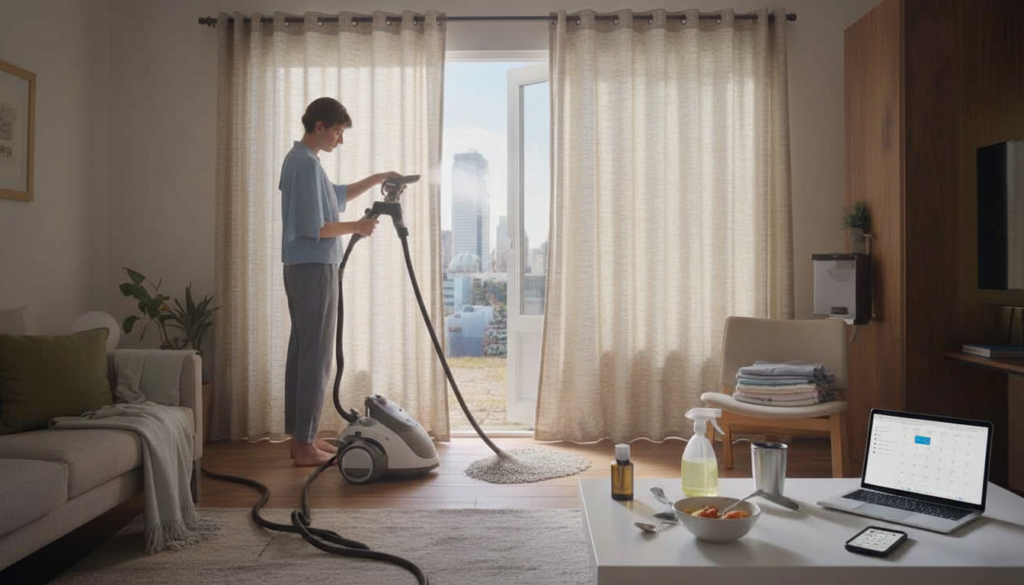
If you have one, bring in the handheld steamer next. Let the hot mist kiss the fibers as you glide it down the fabric from top to bottom. You don’t have to chase every fold. Pay attention to the parts that brush past you when you walk by. That’s where dirt and smells tend to stick the most.
A simple spray bottle can be your secret weapon if you don’t have a steamer. Put some water, a splash of white vinegar, and a few drops of your favorite essential oil in it. Stand a step back and lightly mist, as if you were spraying a fragile plant. You’re not soaking the curtain; you’re just giving it a nice smell to drink in.
A reader told me that she does this on Wednesdays, right after she shuts down her laptop. Three sprays on each panel, windows cracked open, and then she leaves to make dinner. When she sits down to eat, the room doesn’t smell like “screen fatigue” anymore; it smells more like a quiet hotel lobby.
Let’s be honest: no one really does this every day.
The key is to add curtain care to things you already do. Day to vacuum? Attach the upholstery nozzle and gently run it along the edges and hem of the curtains. Cleaning up for ten minutes before guests arrive? Spray the bottom third of the curtains with water and fluff them up with your hands. *Small, repeated movements are better than the mythical “one big wash” that you never get around to.
A professional organizer told me, while looking at her own very wrinkled curtains, “Cleaning that fits into your real life will always beat cleaning that exists only in your ideal life.”
While you’re in the room, open the windows for 5 to 10 minutes.
Once or twice a week, “shake” the curtains by hand.
When you vacuum the floor, lightly vacuum the edges and hem.
Use a steamer or a fine mist spray on areas that are easy to see.
Every few months, switch or rotate the panels to make sure they wear evenly.
Having curtains that feel new, not perfect
Curtains have a strange way of making things feel close. They make your mornings look better, catch the first light, and keep the street from seeing your messy evenings. It doesn’t just affect the room when they smell bad or look dead. It has a quiet effect on your mood.
But most of us don’t want to live in a house where everything is ready for a magazine photo shoot, or we don’t have the time to do it. We want rooms that feel clean and fabrics that feel clean, but we don’t want our weeks to be a never-ending list of chores. A curtain that has been aired out, gently steamed, and brushed by hand may still have a small piece of your life on it. That’s not a problem. That’s where I live.

| Key point | Detail | Value for the reader |
|---|---|---|
| Use short, regular “refresh” rituals | Combine window airing, gentle shaking, and quick vacuuming | Keeps curtains from ever reaching the “disgusting” stage |
| Leverage steam and light misting | Handheld steamer or vinegar-water spray with essential oils | Neutralizes odors and relaxes fibers without taking curtains down |
| Attach curtain care to habits you already have | Pair with weekly vacuuming, room airing, or pre-guest tidy-ups | Makes freshness feel effortless and realistic during busy weeks |
Frequently Asked Questions:
If I don’t take them down, how often should I clean my curtains?
Every week or two, give it a light refresh: a quick shake, open the window, and maybe a mist or steam pass. Every month, a deeper vacuum of the edges and hems keeps buildup from happening.
Can I put essential oils right on my curtains?
Always mix them well with water and vinegar in a spray bottle. Try it out in a hidden corner first. Some oils can leave stains on delicate fabrics or smell too strong in small spaces.
What if I have asthma or allergies?
Try airing out, vacuuming with a HEPA filter, and steam only. Instead of covering up smells with scents, focus on cleaning up dust regularly.
Is it safe to steam all types of curtains?
Most blends of synthetic and cotton work well with steam. When using a steamer on silk, linen, or blackout linings, keep it a little farther away and try it on a small area first. If you’re not sure, use less heat and more space.
What should I do about curtains if I have pets or smoke?
You will need to refresh more often. At least once a week, vacuum the bottom of the curtain to get rid of pet hair. To get rid of smoke, use ventilation, gentle steaming, and a mild vinegar mist to slowly break down the smell that is stuck in the fibers.