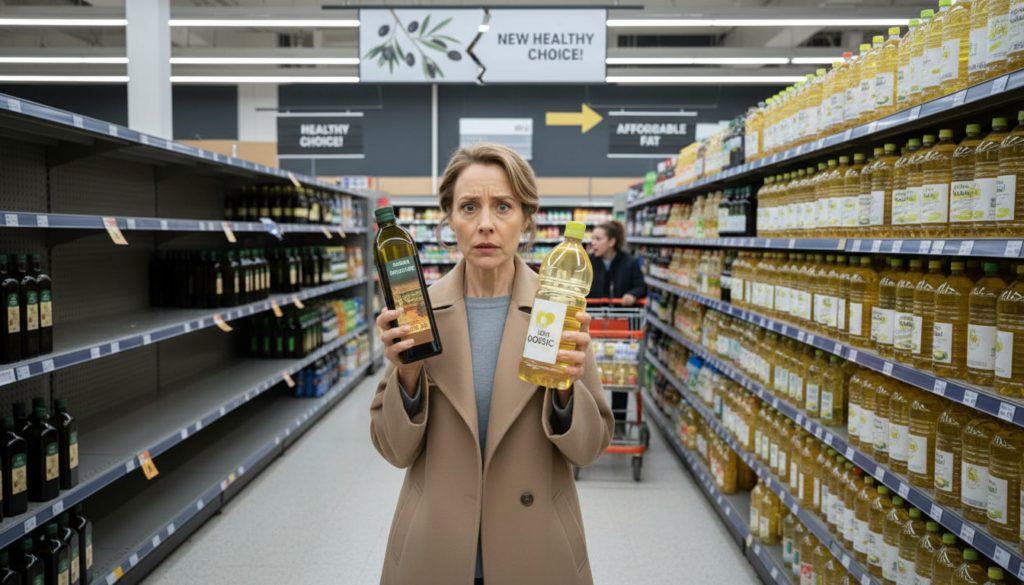
The aisle in the supermarket was strangely quiet, except for the soft clink of glass bottles as a woman in a beige coat picked up a litre of extra virgin olive oil, looked at the price, and slowly put it back. She stood there for a second, unsure of what to do, then reached for a small plastic bottle on the bottom shelf that said “high oleic, heart-healthy” on it and cost half as much.
That moment when a product you trust suddenly feels like a luxury is something we’ve all been through.
Thousands of kitchens are having the same conversation on social media: people are joking that olive oil has become “liquid gold” and sharing tips on a cheaper fat that, surprisingly, does better on some health tests.
The price isn’t the real shock. It’s the nagging feeling that the big Mediterranean myth might not be what we thought it was.

When the “good fat” loses its shine
For a long time, olive oil was the star of every healthy recipe and the shiny green symbol of the Mediterranean diet. Nutritionists liked its monounsaturated fats, chefs drizzled it over everything, and a lot of us felt good about ourselves every time we poured a golden stream into a pan.
Then there were lab tests that looked at how different everyday fats reacted to heat, such as their smoke points, how they oxidised, and how they formed harmful compounds. A rival that was cheaper and almost boring suddenly started to look…smarter.
Get a bottle of high-oleic sunflower or canola oil, which are usually at the end of the shelf and go unnoticed. They are usually refined, have a neutral taste, and are much cheaper than good extra virgin olive oil.
But independent tests and recent reviews of nutrition have quietly said the same thing over and over: these cheap oils stay more stable, oxidise less, and may make fewer unwanted byproducts when used for frying than a fruity extra virgin. No romance, no Tuscan hilltop—just a better performance on the stove.
People start to feel like they’ve been let down. For years, they paid more because they thought olive oil was the best “good fat” for salads, roasting, and deep-frying potatoes on Sundays. The message is now more complicated: extra virgin tastes best raw or when heated gently, but it loses points when it is heated to 200°C for a long time.
There was more to the Mediterranean studies that got a lot of attention than just olive oil. They were about a way of life that included eating vegetables, legumes, fish, little sugar, moving around every day, and eating with other people. But marketing focused on the bottle and made it seem like a miracle cure. The gap between the science and the slogan is where the feeling of betrayal grows.
How to change your oils without going crazy or spending too much money
Use different oils for different tasks in the kitchen, just like you use different knives. This small change makes a big difference. Extra virgin olive oil is a great finishing oil and a gentle cooking partner. Put it on salads, warm vegetables, soups, and quick sautés over medium heat.
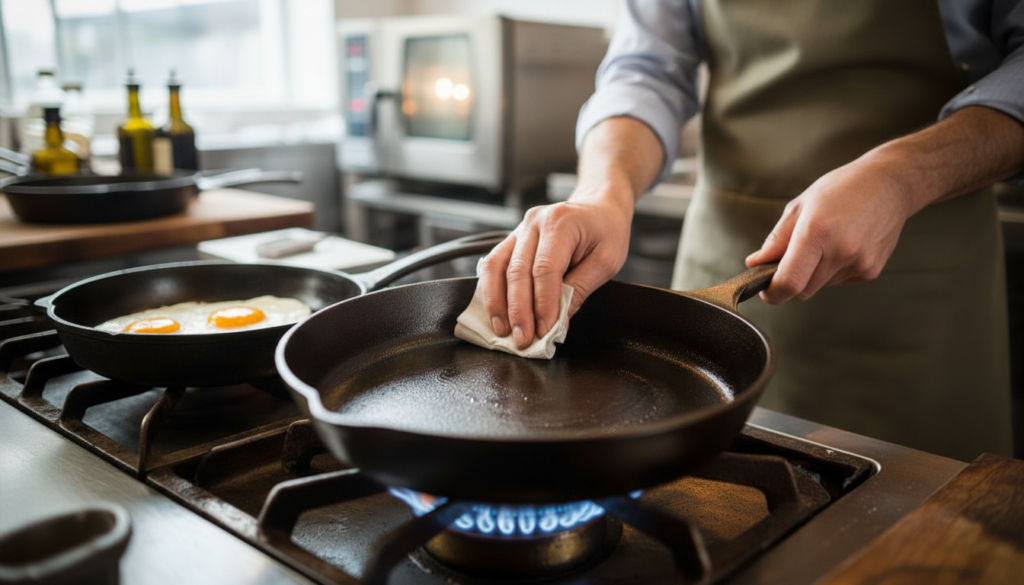
Bring in that quiet, high-oleic budget oil for frying, roasting, or the weekend wok session. If you can afford it, look for labels that say “high-oleic sunflower,” “high-oleic rapeseed/canola,” or “refined avocado oil.” You’re not going against tradition; you’re making it better.
The hard part isn’t technical; it’s emotional. Many people associate olive oil with family recipes, holidays in Greece, or a doctor’s advice from years ago. Switching to a plastic bottle that costs half as much can feel like downgrading your health, even when the lab numbers say otherwise.

Let’s be honest: nobody really reads oxidation studies after work, between homework and the dishwasher. We go by habit, by label promises, by what our parents did. So when prices spike and headlines hint that a cheap oil “beats” olive oil on health tests, the reflex is confusion, even guilt. You’re not alone if you feel a bit tricked.
The plain truth is that no single oil will save or ruin your health. Your overall pattern of eating, moving, and stressing is doing most of the work in the background.
- For raw and low heat
Extra virgin olive oil, cold-pressed rapeseed, or walnut oil for dressings and dips. Taste and antioxidants matter more here than smoke points.
- For everyday high-heat cooking
A **high-oleic, refined oil** (sunflower, canola, peanut) that stays stable in the pan, costs less, and has a neutral taste.
- For flavour hits
Butter, ghee, sesame oil, or hazelnut oil in small amounts, used for aroma at the end rather than full-on frying.
- For your wallet
Keep one good extra virgin for finishing and one budget workhorse for the stove. Two bottles, clear roles, no drama.
- For your peace of mind
Ignore perfection. *If 80% of your meals use reasonable fats with real foods around them, you’re already winning the long game.*The end of a myth, or the start of a more honest kitchen?
The “goodbye olive oil” feeling says less about the oil itself and more about our hunger for simple heroes. For a while, that green bottle carried a whole fantasy of sunlit terraces, long lives, and slim, tanned grandparents. When studies suggest that a low-cost, pale oil behaves better at high heat, it’s like watching the movie set crumble.
Yet something more grounded can emerge from the dust. A way of eating that admits nuance, that doesn’t crown a single ingredient king, that lets a cheap oil be smart for frying and a fragrant one be sacred on a salad. The Mediterranean diet is still one of the most protective patterns in nutrition research, but it’s bigger than any label on a shelf.
Maybe the real upgrade isn’t swapping oils, but talking honestly about trade-offs, budgets, and habits. Less myth, more small daily choices. And a kitchen where both the fancy glass bottle and the humble plastic one have a respected place next to the stove.
| Key point | Detail | Value for the reader |
|---|---|---|
| Separate oils by use | Extra virgin for raw/low heat, high-oleic refined oils for high-heat cooking | Better health profile without losing flavour or overspending |
| Mediterranean myth is oversimplified | The diet’s benefits come from the whole pattern, not olive oil alone | Relieves guilt and pressure around “perfect” oil choices |
| Price and science can align | Some cheaper oils perform better under heat in stability tests | Helps readers save money while staying aligned with current research |
FAQ:
Is olive oil suddenly unhealthy?
No. Extra virgin olive oil is still linked to many health benefits, especially when used cold or at moderate heat. The nuance is that it’s not ideal for every single cooking situation, especially prolonged very high heat.
Which cheap oil is the “healthier” alternative?
High-oleic sunflower or canola (rapeseed) oils are often highlighted in studies for their stability at high temperatures and favourable fat profile, while remaining affordable and widely available.
Can I still fry with olive oil?
Yes, for occasional, moderate frying at home, especially if you use a good pan and don’t let the oil smoke. The concern grows with very high temperatures, long cooking times, and repeated reuse of the same oil.
Does this mean the Mediterranean diet was a lie?
No. The Mediterranean pattern is still among the best-studied healthy diets. The misconception was treating olive oil as the single magic key, instead of one element in a complex lifestyle.
What’s the simplest oil strategy if I don’t want to overthink it?
Keep two bottles: a quality extra virgin olive oil for salads, finishing, and gentle cooking, and a neutral high-oleic refined oil for high-heat frying and roasting. Let the rest of your energy go to eating more plants, fewer ultra-processed foods, and enjoying your meals.