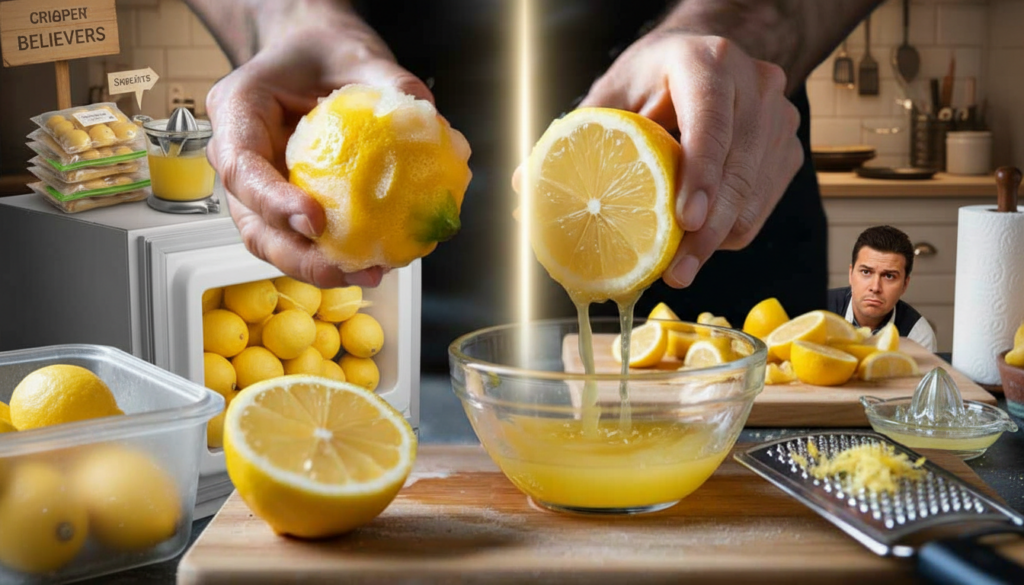
It began with a random TikTok clip humming in the background while pasta water rattled on the stove. A home cook grabbed a lemon from her freezer—hard as a rock—ran it across a grater like a block of cheese, and casually claimed she was “getting three times the juice.” I actually stopped stirring and replayed it. Three times? From the same lemon? It sounded like kitchen math that shouldn’t add up.
Within days, the debate had spread to group chats and dinner tables. One friend swore it changed everything. Another dismissed it as pure social-media exaggeration. Comment sections turned into battlegrounds: Freeze Team vs Fresh Team. Screenshots, counter-tests, dramatic before-and-after photos.
But once you freeze one yourself and feel how it transforms under the knife, it becomes surprisingly hard to stay neutral.

Why Freezing Whole Lemons Turned Into a Kitchen Debate
The first surprise hits when you pull a frozen lemon from the freezer. It no longer feels like fruit—it feels like a smooth yellow stone. The peel is icy, the scent softer than usual. When you slice into it, the blade doesn’t meet the usual resistance. Instead, it glides through with a texture closer to sorbet than citrus.

That shift is where the “extra juice” claim starts making sense. Instead of polite drips, the liquid flows quickly. The segments collapse more easily. Membranes don’t fight back the way they usually do. A lemon that once felt dry suddenly seems generous.
A friend named Laura tried it accidentally before hosting brunch. She had forgotten to buy fresh lemons and found three aging ones in the crisper. On impulse, she froze them overnight, expecting nothing.
The next morning, she thawed one under warm water and sliced it open. The pulp was soft, almost jammy, spilling out faster than she expected. She insisted it produced nearly double what she normally squeezed. Was it magic? Not exactly.
Freezing forms ice crystals inside the fruit. As the water expands, it ruptures cell walls. Once thawed, those broken cells release liquid more freely. You are not creating extra juice—you are simply extracting more of what was already trapped inside.
In everyday cooking, though, that difference can feel dramatic, especially with supermarket lemons that often look bright but deliver little.
How to Freeze Lemons Properly for Better Results
The process itself is refreshingly simple. Rinse your lemons well, dry them thoroughly, and place them in a sealed freezer bag or airtight container. Remove as much air as possible, then freeze them overnight or longer.
When ready to use, you have options. For zest, grate the lemon straight from frozen. The peel produces light, fluffy flecks that scatter beautifully over pasta, fish, or desserts. For juice, allow the lemon to thaw for about 20 to 30 minutes at room temperature. You can speed things up under warm water, but patience gives better texture.
One common mistake is trying to squeeze the lemon while it is still fully frozen. A rock-solid lemon will resist like a stubborn door. Another mistake is freezing them uncovered. Without protection, the peel dries and absorbs freezer odors, dulling the flavor.
Many home cooks also enjoy using the entire fruit after freezing. The softened pulp blends easily into marinades or smoothies. Even the pith becomes less harsh once thawed. The flavor may shift slightly—some say it tastes a bit more bitter and less sharply acidic—but for dressings, baking, and quick sauces, it works beautifully.
A chef once told me he would never freeze lemons at work—but always does at home. The slightly tired lemon rolling around in the fridge? It earns one final chance in the freezer before retirement.
The Big Question: Smart Kitchen Hack or Overrated Trend?
What makes this trick so interesting is how emotionally people respond to it. On one side are the practical cooks—the ones who love minimizing waste and maximizing value. For them, freezing lemons feels efficient and empowering. Having citrus ready at any moment means fewer last-minute grocery runs and less guilt over unused produce.
On the other side are the purists. They cherish the snap of a fresh peel, the burst of fragrant oils in the air, the sharp clarity of just-cut citrus. They argue that freezing softens the aroma and slightly flattens complexity. And honestly, they have a point.
Frozen lemons are not a miracle solution. They won’t elevate every dish or replicate the brightness of a freshly picked fruit. But they do offer convenience and flexibility. They allow you to grate zest on demand, squeeze juice for tea or dressing without planning ahead, and use the fruit more completely.
Most kitchens live somewhere between perfection and practicality. In that middle ground, frozen lemons quietly earn their place.
Try it once. You will quickly know where you stand. Some people freeze a dozen and never look back. Others test it, shrug, and return to the comfort of fresh citrus at room temperature.

Either way, it is a reminder that even the simplest ingredient can spark curiosity, argument, and a small shift in how we cook—without fancy tools or expensive upgrades. Just one lemon, seen a little differently.

| Key point | Detail | Value for the reader |
|---|---|---|
| Freeze whole lemons | Store in bags or containers, zest from frozen, thaw to juice | Always have citrus ready, less waste, easier prep |
| Texture change | Ice crystals break cell walls, pulp softens | Juice releases more easily, closer to full extraction |
| Different use cases | Frozen lemons shine in baking, marinades, drinks | Better flavor in everyday dishes with minimal effort |