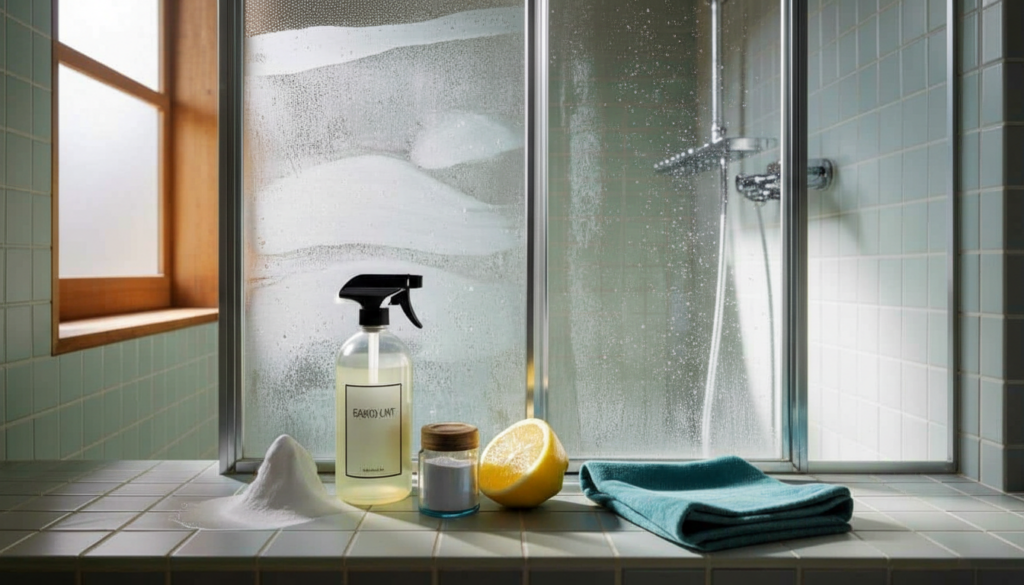
For about three days, the shower had been clean. Then the familiar white fog crept back over the glass, like a film that refuses to leave. You stand there with the water running, staring at chalky streaks that undo all your scrubbing. The limescale just sits there, catching the light and making the bathroom feel slightly neglected.
You open the window, cough from yesterday’s extra-strong cleaner, and realise you don’t want your lungs as polished as your shower door. There has to be a gentler solution.
Glass shower doors remember every drop. That’s their job. And unfortunately, they remember hard water very well.

Why limescale clings so stubbornly
Step into any busy bathroom and you can read the week on the glass. A faint handprint. A cloudy arc where water hits daily. Tiny white dots that refuse to vanish. That hazy veil is limescale buildup, the mineral memory of dried hard water.
 Heavy snow confirmed to intensify overnight as meteorologists warn of whiteout risks Update
At first, it’s subtle. One day you notice the sparkle is gone. Once you see it, you can’t unsee the matte blur across what should be crystal-clear glass.
You tidy up before guests arrive, wipe surfaces, straighten towels — then open the shower and freeze. In brighter light, the door looks like frosted privacy glass. But you paid for clear. That frustration pushes many people toward harsh chemical sprays.
You spray until your nose burns, shut the door, and wait. Ten minutes later, your eyes sting and the limescale still lingers. It feels like a bad trade: strong smell, small result. That’s usually when people start searching for simpler methods.
Limescale is simply a mineral residue. When hard water dries, calcium and magnesium remain behind. Layer after layer builds up, scattering light and turning transparency into haze. The problem isn’t dirt. It’s mineral accumulation.
Commercial sprays dissolve these minerals quickly, but they can irritate skin, lungs, and metal fittings. Natural acids like white vinegar or lemon juice work more slowly but target the same deposits without the chemical assault. The secret is not brute force — it’s time and patience.
Gentle methods that actually work
The simplest method begins with warm white vinegar. Heat a cup slightly, pour into a spray bottle, and coat the glass generously — especially the lower panels where water collects. Let it sit for 10 to 15 minutes before touching it.
Use a soft microfibre cloth or non-scratch sponge and work in small circles, focusing on stubborn patches. Rinse with warm water and finish with a clean squeegee from top to bottom. Often, one round clears the cloudy film entirely.
If buildup is thicker, resist scrubbing harder. Instead, extend the soak time. Stronger scrubbing risks fine surface scratches that make glass cloud faster later.
For extra lifting power, combine vinegar with baking soda. Spray vinegar first, then lightly press a cloth sprinkled with baking soda onto stubborn areas. The gentle fizz helps loosen mineral deposits without harming the surface.
 Meteorologists warn early February atmospheric signals point to a dangerous Arctic anomaly Update
Move slowly, as if polishing glassware. Rinse thoroughly to prevent powdery residue. Many people only realise how dull the door was once they see it clear again.
Here’s the honest truth: the secret is consistency, not heroics. One intense annual cleaning cannot undo years of hard water buildup.
Clara, who once cleaned wearing a mask, switched to a simple weekly vinegar routine. “The bathroom smells better and the glass stays clearer,” she says. “I didn’t need nuclear products. I needed a steady habit.”
- Use warm vinegar for better dissolving power.
- Choose soft microfibre cloths instead of abrasive pads.
- Let solutions sit before wiping — patience beats force.
- Rinse and dry thoroughly to prevent the cycle restarting.
- Stick to one simple routine you’ll actually follow.
Clear glass without constant battle
Once the haze is gone, maintenance becomes easier. After the last shower, run a quick squeegee swipe. Open a window or turn on ventilation to reduce lingering humidity. Check lower edges where water pools and dries into crust.
Let’s be honest: no one maintains perfection daily. Towels pile up, mornings get rushed. That’s why a weekly reset with vinegar or lemon is more realistic than chasing spotless glass after every shower. The goal isn’t showroom shine. It’s glass that doesn’t irritate your eyes every time you pass by.
Important point
| Important point | Detail: What the reader gets |
|---|---|
| Soft acids over harsh sprays | Lemon juice or white vinegar dissolve mineral buildup gently, reducing skin and lung irritation while improving indoor air quality. |
| Soaking time matters | Allowing 10–20 minutes of contact time reduces scrubbing effort and lowers risk of scratches. |
| Small habits prevent buildup | Weekly cleaning and simple squeegee use maintain clarity with less effort long term. |
Frequently Asked Questions
Will vinegar damage my metal fittings?
White vinegar is generally safe for glass and most metals if used briefly and rinsed afterward. Avoid soaking natural stone or marble surfaces.
What if I dislike the smell of vinegar?
Fresh lemon juice works similarly. You can also add a few drops of essential oil and ensure good ventilation for faster odor dissipation.
How often should I clean to prevent buildup?
In hard water areas, once a week is usually sufficient. Daily squeegeeing can extend this interval to two weeks.
Is baking soda safe for glass?
Used gently on a soft cloth, baking soda is mildly abrasive but typically safe for shower glass when not scrubbed aggressively.

Do store-bought eco sprays work as well?
Many contain similar acids like citric acid or vinegar derivatives. Check ingredient lists and test on a small area before full use.