I put a bunch of potatoes in a pot of water the other night and just stared at it. A quiet, pale bath. There was no smell, no colour, and nothing that made me want to eat. I suddenly realised that I was going to spend twenty minutes boiling them to death and then throwing that sad water down the sink like it never happened.
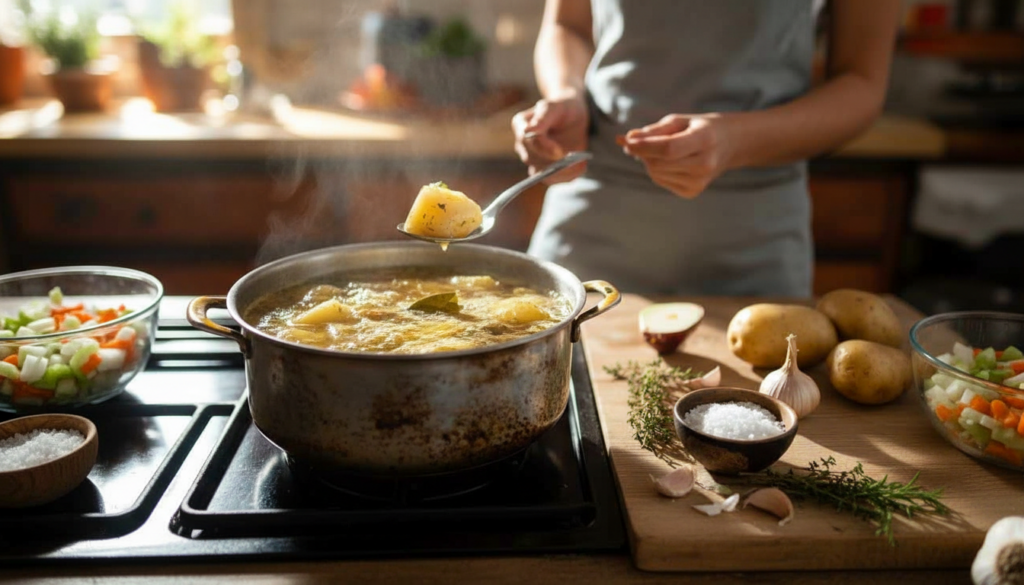
So I did something else I took a carton of broth the last half-onion from the fridge and a bay leaf that I had forgotten about The kitchen smelt like a small bistro in just a few minutes The potatoes were the same but the air felt warmer louder and almost generous.
I knew I wouldn’t go back when I tasted one right out of the steaming colander. Water had officially been fired.

Why I chose potatoes over plain water
There’s this quiet disappointment that comes with boiled potatoes. You peel, chop, and add a little salt to the water. Then you wait. Then you take a bite and say, “That’s it?” You try to fix something that was never going to work by adding more salt, butter, or maybe even sauce.

Potatoes soak up flavours but water doesn’t give them much to soak up Yes they come out cooked but they are shy and plain. If you switch to an aromatic broth, the whole thing changes. The potato doesn’t just get softer; it changes, and the kitchen smells like you suddenly know what you’re doing.
It was a complete accident that I tried broth instead of water for the first time I had already put water in the pot when I remembered that I had a half-used vegetable broth in the fridge that was very close to going bad I put in half broth and half water a clove of garlic without peeling it and a lonely carrot for good measure.
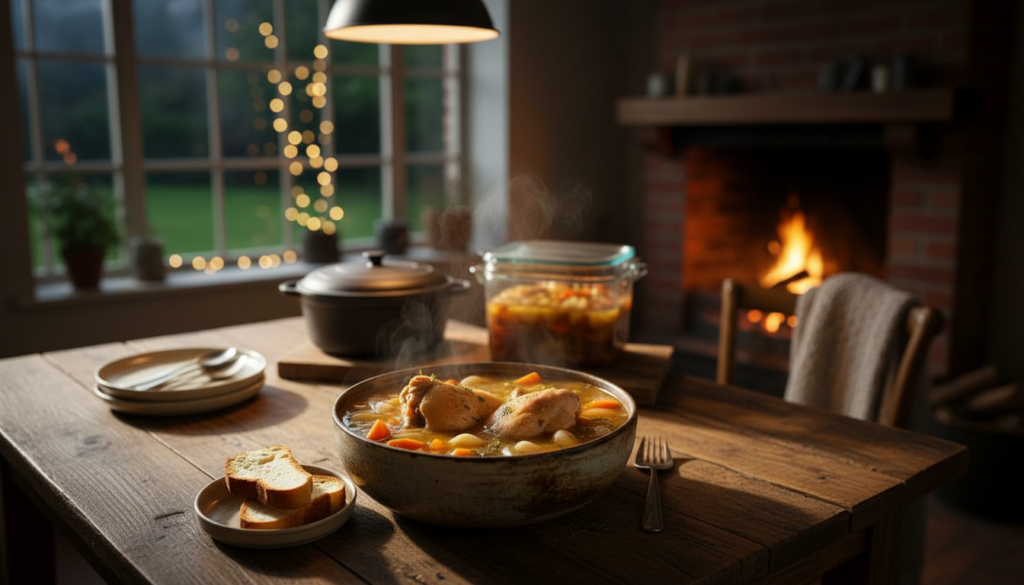
I opened the lid fifteen minutes later and the steam felt like a hug The potatoes were golden on the outside and had a hint of salt on the inside. I ate two with my fingers over the sink, and I laughed when I burnt my tongue. These potatoes had a personality.
This little revolution makes sense Water has no charge. It cooks but doesn’t talk. Broth is full of flavour that has been dissolved, like salt, herbs, vegetable sugars, and collagen if it was made at home. As the potatoes cook, they let out some of their starch, which they then pull into their cells.
Instead of seasoning only the surface after cooking you’re flavoring them from the core That’s why they taste better even before you add anything on top As the broth simmers it gets a little thicker which makes the flavour stronger The potatoes also become soft edible sponges that soak up whatever you put in them.

The exact fragrant broth that changed my potatoes
This is the easy way that made weeknight dinners at my house better I mix together water and broth in about equal parts As long as it’s not too salty to begin with any kind of broth will do vegetable chicken or light beef The potatoes are cut into even pieces and put in the pot.
Then comes the “secret” part a smashed garlic clove a bay leaf a small piece of onion and a little bit of olive oil. I sometimes add a sprig of rosemary or thyme. The potatoes should be just covered by the liquid. Let everything simmer gently, not boil wildly, and let time do its thing.
A lot of people get angry when their potatoes come out mushy cracked or tasteless even after using broth A lot of the time the mistake happens before the stove is even on. They cut the potatoes too small, drown them in too much salty stock, or turn up the heat so high that the outside falls apart while the inside stays a little firm.
Think of it as a slow conversation between the potato and the broth A little patience moderate heat and enough liquid to cover Taste both the cooking liquid and a piece of potato before draining You should only add salt at the end so that you don’t get a dish that is too salty and can’t be saved.
As we passed a bowl of golden steaming wedges across the table a friend who cooks at home said The day you stop cooking potatoes in plain water is the day they stop needing to be rescued by sauce.
- To keep costs and salt levels down use half broth and half water.
- Only add one or two strong-smelling things like garlic bay leaf thyme or a little bit of leek.
- Simmer gently don’t let the pot rage and slam the potatoes around.
- Try the liquid while it’s cooking it’s the best way to get a taste of the final flavour.
- Save some of the cooking broth to mix in or pour on top later.
What happens when potatoes finally taste good?
When you cook potatoes in a fragrant broth side dishes stop feeling like chores and start feeling like the main event. When you add less butter to mashed potatoes, they taste richer. Even if you put together a simple potato salad at the last minute, it will taste deeper, almost like it came from a restaurant.

You can also see the ripple effect the leftover broth which is thick and smells good can be used to make a quick soup or a sauce for another meal. With just one small change, the pot on the stove can do two things at once without you having to do anything extra.
 Heavy snow confirmed to intensify overnight as meteorologists warn of whiteout risks Update
| Important point | Detail: | Value for the reader |
|---|---|---|
| Change water to broth | Use half broth half water for simmering | A quick way to add flavour without changing your routine |
| Add some simple scents | Olive oil garlic onion bay leaf and herbs | Adds depth and a “homemade” flavour to potatoes |
| Use the cooking liquid again | Save some broth for soups sauces or mashes. | Less waste and more use of ingredients |