The first cold night of the year came out of nowhere. One minute I was answering emails, and the next I was holding a chipped mug of tea and scrolling through my fridge like it was Facebook. A lemon that is only half. Some carrots that weren’t in great shape. A pack of chicken thighs I’d meant to cook three nights ago.
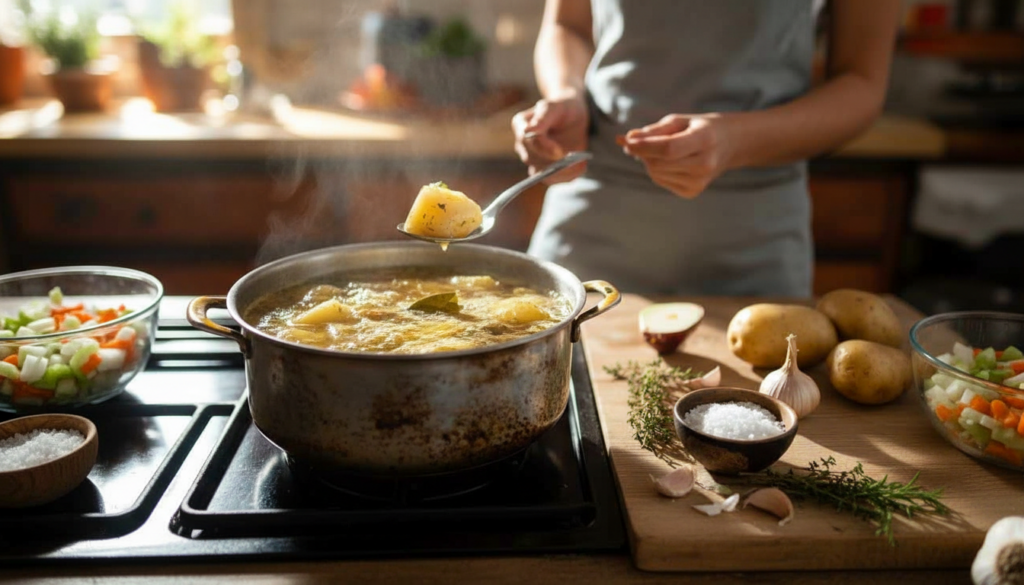
I put them in a pot with garlic, onions, and any herbs I could find on the windowsill. The kitchen got foggy, the windows steamed up, and the smell wrapped around the whole apartment like a blanket.
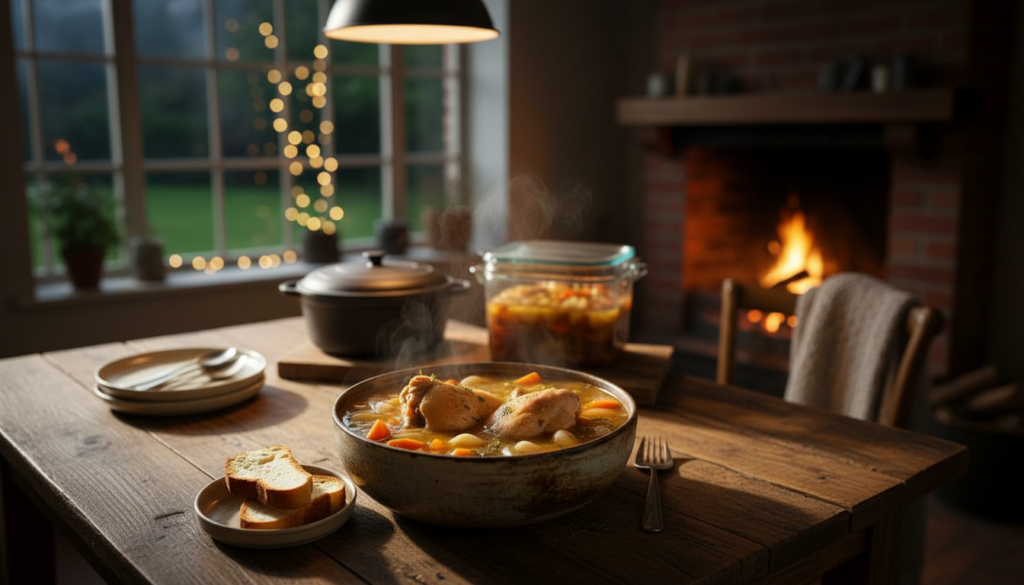
That night, we ate it right out of wide bowls while hunched over the table and barely talking.
The real surprise came the next day.

Why this easy chicken dish tastes even better on the second day
The funny thing about cozy food is that we make it for now, but it often helps us later. The chicken dish, which was like a lazy stew that was between a braise and a soup, was good the first night. Familiar, warm, and comforting.
The second day, though, it tasted like a different recipe. The broth was smoother, the garlic was less strong, and the lemon was deeper instead of sharper. The chicken fell apart with just a little push of the fork, soaking up flavor that hadn’t been there the day before.
That’s when it hit me: this wasn’t just dinner. It was one of those rare meals that time makes better when you eat it again.
You might have felt that way about food too. The next-day lasagna that tastes just like the one you had as a kid. The chili that tastes good on Sunday but is perfect by Monday lunch.
The change with this chicken felt almost unfair. I casually reheated it on the stove over low heat, thinking it would just “do the job” between meetings. I shut my laptop after one bite. The onions had almost disappeared into the broth, the carrots had become sweet and soft, and the thyme I had added without thinking was now the quiet star of the whole thing.
It was like eating the “director’s cut” of last night’s meal.
This happens for a simple, almost boring reason. When you make saucy or brothy dishes, the flavors need time to mix. When you put the stew in the fridge, the fat hardens. When you heat it up again, the fat melts and carries the flavor deeper into the meat and vegetables. Spices soften, edges round out, and the sauce thickens just enough to coat everything instead of sliding off.
People who study science talk about proteins, starches, and diffusion. What you feel at the table is this: the sharp notes from yesterday turn into the harmony of today. The salt, the acid, the sweetness from the vegetables, and the richness from the chicken skin all stop fighting and start working together.
Leftovers aren’t just “what’s left.” Sometimes they are the way the dish was always meant to be.
The little things that make cozy chicken into gold the next day
The base of this chicken dish that works well with leftovers is almost too easy. I start with chicken thighs with bones in them. I pat them dry and season them with salt, pepper, and a little smoked paprika. They go into a heavy pot with hot oil, skin side down, and stay there until they sound like rain on a tin roof.
I add sliced onions, smashed garlic cloves, carrot chunks, and a splash of white wine or water to pick up all the browned bits from the bottom once they are brown. After that, add chicken stock, a squeeze of lemon, a bay leaf, and a handful of herbs.

I put the lid on, turn the heat down, and let it bubble just enough to make the chicken tender and the house smell like you haven’t been tired in months.
The key to great leftovers starts long before you put them in the fridge. You want enough liquid for the flavors to move around, but not so much that everything is floating. Think: not soupy, but cozy. Add salt slowly at first, then taste it again after it has rested or cooled.
A big, quiet mistake that a lot of us make is reheating on full blast. High heat makes the chicken tougher and the sauce less clear. You can wake up the dish without shocking it by cooking it low and slow on the stovetop with a little water or stock.
We’ve all been there: the time you put something in the microwave for too long and it tastes like it was punished.
A chef friend once told me, “Leftovers are like second drafts.” “The first day is the idea.” The next day is when you make changes.
- Salt in layers Instead of putting it all in at once, season it lightly at each step. The next day, the flavors are more rounded and not too salty.
- Use chicken with bones in it. Bones make the broth richer overnight and keep the meat tender when you reheat it. You can use boneless, but it won’t be as rich.
- Keep it cool and store it right. Let the pot cool down a little, then move it to shallow containers. Put it in the fridge within two hours. That’s what keeps the flavor fresh and the texture clean.
- When you serve, add something new. A squeeze of lemon, some chopped parsley, or a spoonful of yogurt on day two adds a different flavor to the deeper, slower ones.
- After reheating, let it sit. Take it off the heat and cover it for five minutes. The sauce settles, the heat evens out, and the taste seems to be more “finished.”
When you think of leftovers as a small act of kindness to your future self
It’s nice to know that tomorrow’s lunch is already waiting for you, and it’s better than when you first made it. That chicken dish made three meals: a bowl of rice, a plate with toasted bread to dip in the sauce, and the last bit with some pasta and peas. It seemed like you had to do more work to get each version to taste good.
Let’s be honest: no one cooks like this every day. There isn’t that much room in life. But once a week, a pot like this turns your fridge into a line of easy wins instead of containers that make you feel bad for forgetting about them.
The way some dishes get older is almost like they have feelings. On the first day, they are about trying hard and having a goal. On the second day, they’re about the care you sent ahead to yourself. The flavors get stronger just when your energy doesn’t.
Maybe that’s why so many of us love leftovers but don’t talk about them like they’re the main event. This cozy chicken stew shows the opposite. It is not a prize for cooking “real” food.
Sometimes the meal that makes you feel best is the one you don’t have to touch.
When you cook chicken in a pot, with broth, vegetables, herbs, or anything else you have on hand, think of it as a story that lasts for two days. Day one is a day of comfort. The second day is the glow-up.
With this in mind, you could start making changes, like adding more onions, an extra carrot, and a spoonful of mustard at the end for flavor. You know that tomorrow it will taste like you had a chef in your kitchen.

And who knows? That quiet box in the fridge could become your favorite part of the week.

| Important point | Detail | What the reader gets out of it |
|---|---|---|
| Pick the right cut | Chicken thighs with bones in them stay moist and get more flavorful overnight. | Day two: meat is juicier and broth is richer. |
| Cook in liquid that tastes good | A strong base is made up of onions, garlic, herbs, stock, and a little bit of acid. | Leftovers don’t taste flat or “tired”; they taste complex. |
| Store and gently reheat | Let it cool down safely, put it in the fridge, and then slowly reheat it with a little bit of liquid. | Better texture, cleaner taste, and leftovers that are safer |