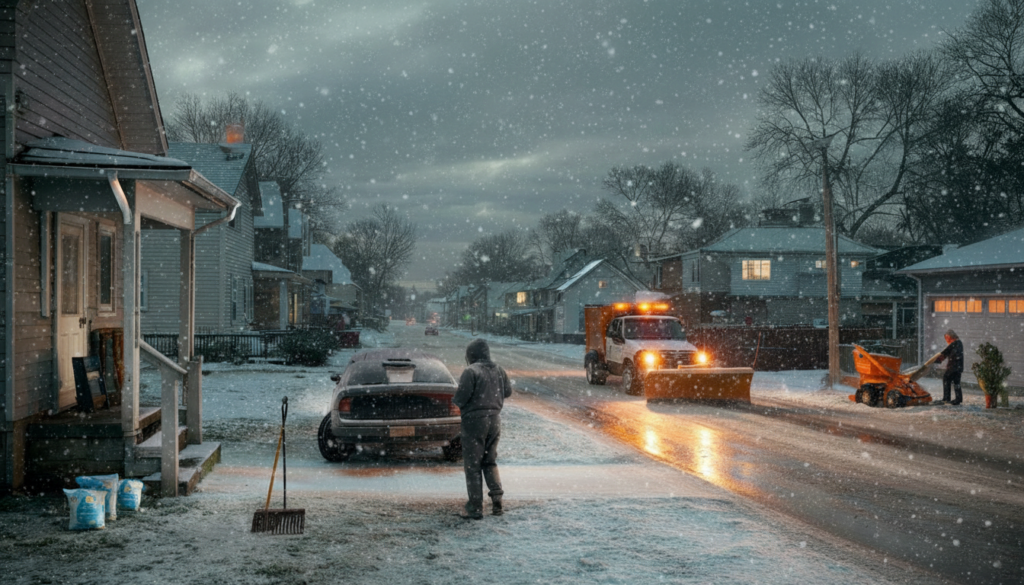
By late afternoon, the sky had already turned that dull metal gray that makes people walk faster for no reason. People were pulling on their dogs’ leashes, grocery bags looked a little fuller than usual, and you could feel a slow, quiet sense of urgency in the parking lot of the supermarket. No one said it out loud, but everyone knew: the storm was coming.
Salt trucks drove by on the highway like big, heavy beetles, their orange lights spinning in the dusk. Streetlights came on early, catching the first flakes that weren’t supposed to come yet. The air felt heavy and ready.
Those little lights are going to turn into hours of heavy snow tonight.

The kind that changes your plans before you even make them.

When the forecast stops being vague
By early evening, all of the weather apps were saying the same thing: a lot of snow would start falling late tonight and last all day tomorrow. The numbers on the screen looked almost too good to be true: 8, 10, or even 12 inches in some places. These are the kinds of totals you take a screenshot of and send to friends with a raised-eyebrow emoji.
People were trading screenshots like trading cards in neighborhood group chats. One person trusted the local TV meteorologist, another trusted a national app, and another followed a hobbyist forecaster on Twitter who “called the last storm perfectly.” The maps changed color from blue to dark blue to purple. And you could tell that people were quietly making up their minds: “Okay, this is real.”
That choice led to action on Maple Street. A man in a faded hoodie pulled two bags of salt out of the trunk and put them next to the front steps. A teenager with headphones on the other side of the street brushed leaves away from a storm drain and stopped to check his phone every now and then. An older neighbor down the street was having trouble with a snowblower that hadn’t worked since last winter.
Earlier, the line for shovels at the hardware store went all the way to the paint aisle. As people looked nervously at the sky getting darker, a clerk kept saying, “We have more in the back, I promise.” At 7 a.m., no one wanted to be the one to try to clear a foot of snow with a garden spade.
MeteorMeteorologists have been watching this system for days as it pulls moisture from the south and cold air from the north, which is a typical winter pattern. When the two collide over the area tonight, the weather will be perfect for what they call “efficient snowfall,” which means the flakes will stack up quickly instead of just falling.
When the temperature drops below freezing, roads that feel just damp at dinner time can become very dangerous by midnight. That’s why you’ll see plows and salt trucks driving around long before the first heavy bands come. They’re racing against time to give the pavement a chance to hold up before the white curtain really falls.
How to get ready without making a lot of noise before the snow comes
Before a big snowstorm, the best thing you can do is go through your house slowly and methodically, like a checklist. Not in a panic, just noticing what would suddenly matter if you woke up to a power outage and blocked roads.
Charge your phone, laptop, and any portable batteries you have. If you use an electric pump, fill a few pitchers or big pots with water. Put a flashlight on the kitchen counter where you can find it at 3 a.m. Get out of the house. Before it disappears under a thick, wet blanket, clear the steps, the balcony, and the narrow path you always curse in the morning.
Many people don’t take the storm seriously until it “really starts,” which is when the small mistakes add up. You park right behind another car, and when you wake up, the plow ridge has you boxed in. You leave the wipers down and have to chisel them free in the dark. You forget to flip the side mirrors in, and a plow that goes by covers them in a frozen wall.
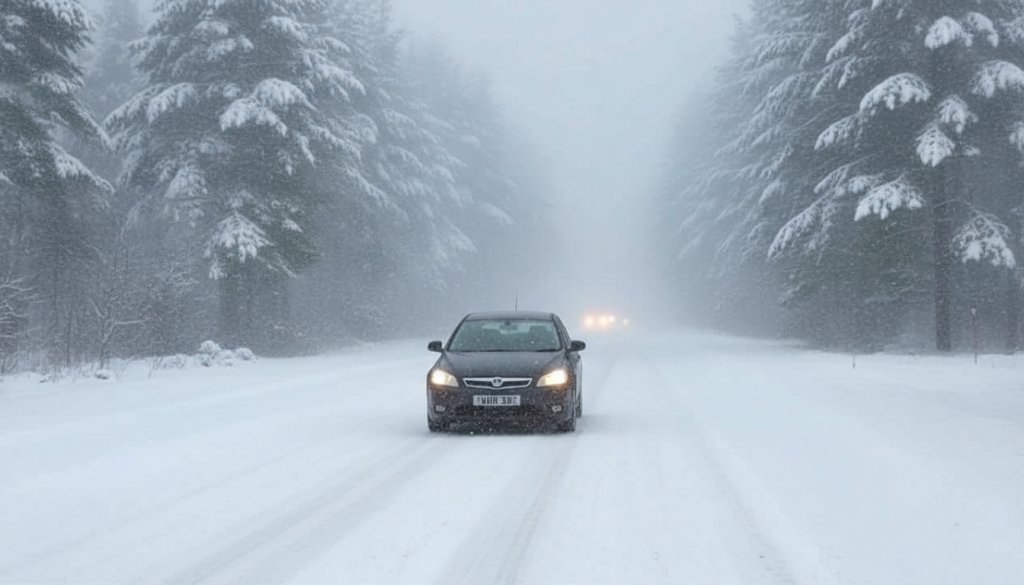
People also want to treat the night before like any other: “just one more quick trip to the store,” “a late drive across town,” or “just meeting a friend, it’s only flurries.” That’s when the timing goes wrong and you end up on an empty road with headlights catching fat, swirling flakes and tires starting to slip. To be honest, no one really plans to be out in the worst of it. They just get the timing of the “worst” wrong.
 Citrus Skins in Simmering Water Produce a Cold-Season Aroma Residences Struggle to Recreate Update
One city plow driver said last winter, “People think the storm starts when they see big flakes.” It starts six hours earlier for us and doesn’t end until the last cul-de-sac is clear.
Before going to bed
If you can, move your car off the street, plug in your phone, bring in anything from the balcony or yard that could blow away or freeze, and set one alarm for a little earlier than usual.
The next morning
Put your boots by the door, lay out warm, layered clothes, and dry socks. Keep a small towel or mat handy so you don’t have to skate on a wet floor.
For people who drive
You should have a brush and scraper in your car, a half-full gas tank at the very least, and a simple winter kit that includes gloves, a hat, a small shovel, a blanket, and maybe a snack. You don’t have to go all out for the end of the world; just be ready for your car to be stuck longer than you’d like.
What this kind of storm quietly changes
Heavy snow that starts late at night has a strange way of changing people’s lives before they even wake up to see it. The streets that usually roar at 7 a.m. sound like a library, and morning commutes are gone. Video meetings suddenly have kids and pets in the background. The city doesn’t stop, but it does move slowly.
For some, that break feels like an unwanted interruption: canceled meetings, late packages, and another day of scrambling to find childcare. For some people, it’s a surprise reset that gives them a reason to make a real breakfast, let the kids sleep in, or finally read the book that has been sitting next to the couch for a while.
We’ve all been there: the moment you pull back the curtain and the world looks softer, quieter, and more complicated than it did the night before.
| Important point | Detail: What the reader gets out of it |
|---|---|
| Get ready before bed | Charge devices, fill up with water, clear paths, and change the parking lot.Lessens stress and last-minute rushing in the morning |
| Respect the time | The heaviest snow usually falls overnight when the temperature drops.Keeps you from driving or traveling late at night when it’s dangerous |
| Make plans for the next day | A flexible schedule, backup plans for work and childcare, and snow gear readyKeeps your day going even when things don’t go as planned |
Questions and Answers:
Question 1When will the heavy snow really start tonight?
Most forecasts say that light snow or a mix of snow and rain will fall in the evening. As the temperature drops, the snow will get heavier and more steady. Check a radar map within 30 to 50 miles of where you live and look at the “future” timeline to find out the exact hour. If you see the darker blues or purples moving toward your area, you are usually only a few hours away from the real ramp-up.
Is it safe to drive late tonight if the snow hasn’t really started yet?
In short, only if you’re ready for things to change quickly while you’re out. When the temperature drops below freezing and bands of heavier snow move in, roads can go from wet to slick in less than an hour. It’s usually safer to wait until tomorrow afternoon to go. If it can’t, tell someone where you’re going, keep your phone charged, and slow down more than you think you should.
Question 3: How much snow do we really expect to get by tomorrow morning?
Most models say that there will be a lot of snow that can be plowed. For many areas under the main band, it will be between 6 and 10 inches, and for the areas where the heaviest snow falls, it will be more. A ten-mile change in the storm track can mean the difference between slush and a full foot of snow. Local differences are very important. That’s why you should watch local TV forecasts and city alerts along with the big national apps.
Question 4What can I do tonight to make shoveling easier tomorrow?
A quick “pre-shovel” pass can make a big difference if the snow starts before you go to bed and is already piling up. This is especially true for wet, heavy snow. Put some salt or sand on the steps and the first few feet of sidewalk. Park your car so you can pull straight out, not sideways through a packed plow ridge. Tomorrow, you will be thankful in a quiet way.

Question 5: Will schools and offices probably be closed?
The amount of snow, the time of year, and how ready your city is for winter storms all affect whether or not schools will close. When a lot of snow falls overnight and keeps falling into the early morning, many districts delay or close schools so that plows can do their jobs. Late tonight or very early tomorrow, you might get texts, emails, or app alerts from your school, transit service, or job. If you can work from home, today might be the day to say so.