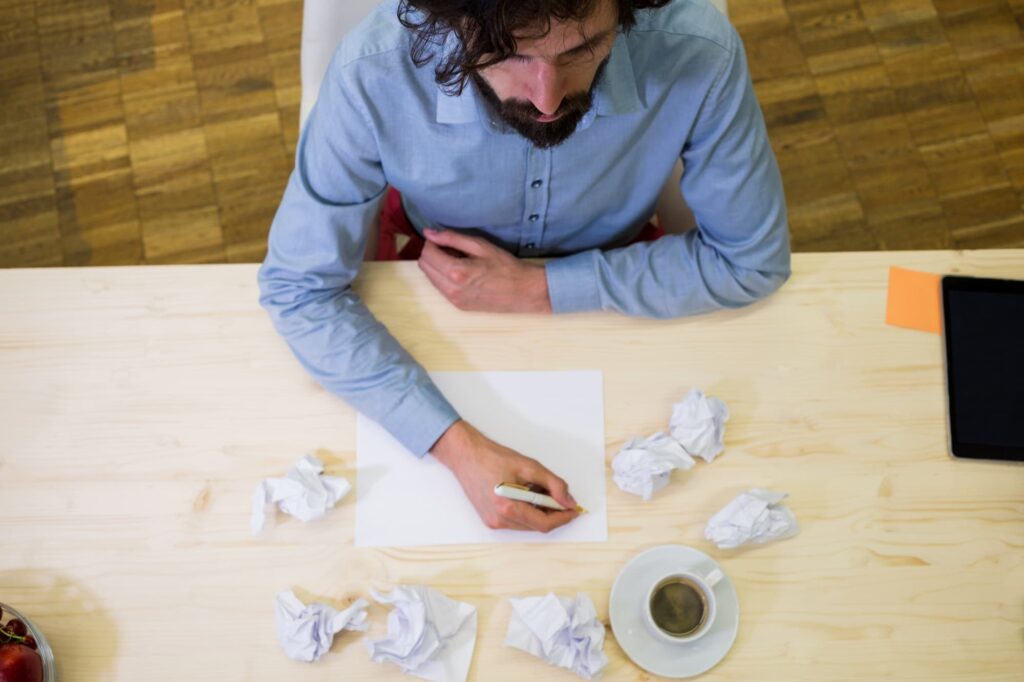
The list starts with a pen that skips. You scratch over the same letter three times, blow on the page as if that helps, and finally the ink flows. Groceries, work tasks, a birthday gift you almost forgot. Your handwriting leans a bit more than last year, the “R” in “rent” looks vaguely like your dad’s, and there, in the margin, a tiny doodle you don’t remember making.
On your phone, the list feels cleaner sharper almost too perfect. You tap a glowing plus sign, type “email Sarah,” drag it up to the top. Items vanish with a satisfying ding and a grey checkbox. Everything is stored, synced, backed up.
Why a scrappy handwritten list sticks in your mind
When you write a list by hand, your brain throws a small party of signals. Your fingers move in uneven strokes your eyes track each letter, and your motor cortex works harder than it ever does when you tap glass. Neuroscientists talk about a kind of three way handshake: movement, vision, memory.

Each crooked line, each half formed e, becomes a tiny anchor in your mind. You’re not just registering words you’re leaving physical traces. That slightly coffee-stained corner? Your brain ties it to the moment you wrote “call dentist” while half awake. It’s messy, but it’s embodied memory.
One Norwegian study on students found that handwriting engages more complex brain activity than typing, especially in regions tied to learning and recall. Their brains lit up in richer patterns as if the words were being carved into internal space instead of just laid on top.
Think about the last time you rewrote a messy list. Second draft same items. Somehow, you remembered more of it without even glancing down. The act of rewriting felt annoying but later you could picture exactly where “passport renewal” sat on the page. That spatial memory — top right bottom left, squeezed in sideways — acts like a quiet GPS for your thoughts.
Researchers suspect this happens because handwriting slows you down just enough for deeper processing. You can’t write as fast as your mind races, so your brain is forced to select, condense, prioritize. That natural friction sharpens focused attention.
On a screen, your brain sees uniform letters in neat lines, identical every time. On paper, it sees shapes that only you make. That personal imprint tells your memory, this is mine, this matters. Your list literally wears your mental fingerprints. The result: handwritten items feel more “real” and less forgettable
What digital lists do to your focus and sense of control
Digital lists are a different animal. When you type into an app, your brain leans on speed and automation. Autocorrect finishes the word, templates suggest tasks, reminders pop up before you’ve even had a chance to forget. It feels efficient, almost frictionless flow.
Yet each tap is competing with notifications bright icons, and a dozen other apps one swipe away. Your list doesn’t live in its own world, it lives in a casino. Even if you only meant to jot down “pay gas bill,” your attention is already half pulled toward the red badges glowing at the edges of the screen.
Picture yourself on the bus, phone in one hand, thumb flying. You open your to-do app and see four unfinished lists from last week, two from last month, and a lonely “Someday” list with 43 items. You quickly type five new tasks, then a message appears, a news alert flashes, and you’re gone instantly.
Later that night, you swear you wrote down “print tickets,” but the app feels like a junk drawer. The list is there, somewhere, buried between “organize photos” and a habit you abandoned three weeks ago. The brain doesn’t anchor it to any sensory cue — no page edge, no ink color, no physical location — just another line in a bottomless scroll.

Digital lists often pull your brain into what psychologists call continuous partial attention. You’re half with the list, half bracing for the next vibration. The upside is flexibility: search, reorder, postpone, duplicate. The downside is that the list becomes fluid and endlessly editable, which your brain quietly interprets as “not final, not urgent.”
Typing also levels everything. The task that terrifies you and the one that takes 30 seconds look exactly the same in Arial or San Francisco font. On paper, you might underline one, circle another, or write one in huge letters. On screen, you rely on symbols and sorting. That smooth uniformity is great for organizing, less great for memory and emotional weight.
How to get the best of both worlds without turning productivity into a full-time job
One simple method: split your lists by brain mode not by tool. Use paper for deciding and digital for storing. Start your day with a small handwritten list — five to eight items, no more — even if most of them will end up in an app afterward.
Write it on the same notepad or in the same notebook every time. Let your hand wander a bit: underline one word, star another, draw a quick box around the thing you really don’t want to do. This engages your motor memory and emotional brain in one shot. Then, once the “real” list is alive on paper, you can translate the essentials into your phone if you need reminders or sharing.
A common mistake is trying to run every part of your life from one giant digital master list. It feels rational, but your brain quietly taps out. Pages of unchecked items numb your sense of progress, and the app starts to feel like a record of failure, not support.
Another trap is treating paper as sacred and digital as “cheating.” That just creates guilt on both sides. You’re allowed to scribble tasks on receipts and still use a calendar app. You’re allowed to forget a list, to cross out whole sections, to delete a recurring task that never actually happens. Let’s be honest: nobody really does this every single day. The goal isn’t purity, it’s real relief.
- Use paper when you feel scattered. Handwriting slows your thoughts, settles your nervous system, and helps you decide what really matters in the next few hours.
- Use digital when you need backup. Long-term projects, shared chores, reminders for three months from now — your brain loves not having to carry that weight alone.
- Keep lists visually small. A short handwritten “today” list beside a focused digital project list beats one massive file you dread opening.
- Let lists expire. Old pages can stay in the notebook as quiet archives. Old digital lists can be archived or deleted without ceremony.
- Notice how each one feels. If your phone list tightens your chest and your paper list makes you breathe easier, that’s data, not drama.
Living between paper and pixels, on purpose
Here’s the plain truth: your brain never signed a contract to be fully analog or fully digital. It just adapts to whatever tools you hand it, then mutters quietly when those tools stop matching how you actually live.
Handwritten lists ground you in the moment. They smell like coffee, wrinkle when you shove them in a pocket, pick up crumbs from your desk. They belong to a specific day, a mood, a version of you. Digital lists float above time, ready to sync across continents but also to disappear into their own abundance.
Some days you need the friction of pen and paper to really face what you’ve been avoiding. Other days you need an app to carry the load while your mind is fried. You can choose differently from morning to evening.
What becomes interesting is not which tool is “better,” but what each reveals. The way you write on paper when you’re anxious. The way you overfill digital lists when you’re chasing control. The moment you finally cross something off in real ink and feel your shoulders drop, just a little. That’s your brain, reacting in real time to the tiny systems you build around it — and quietly asking you to listen.
| Key point | Detail | Value for the reader |
|---|---|---|
| Handwriting deepens memory | Engages motor, visual, and spatial areas of the brain, creating richer recall | Better chance of actually remembering and doing what’s on your list |
| Digital lists are flexible but distracting | Live among notifications, easy to edit and postpone endlessly | Understand why tasks feel less urgent and adjust your habits |
| Hybrid systems work best | Paper for daily focus, digital for long-term storage and reminders | Less mental overload, more realistic and sustainable productivity |