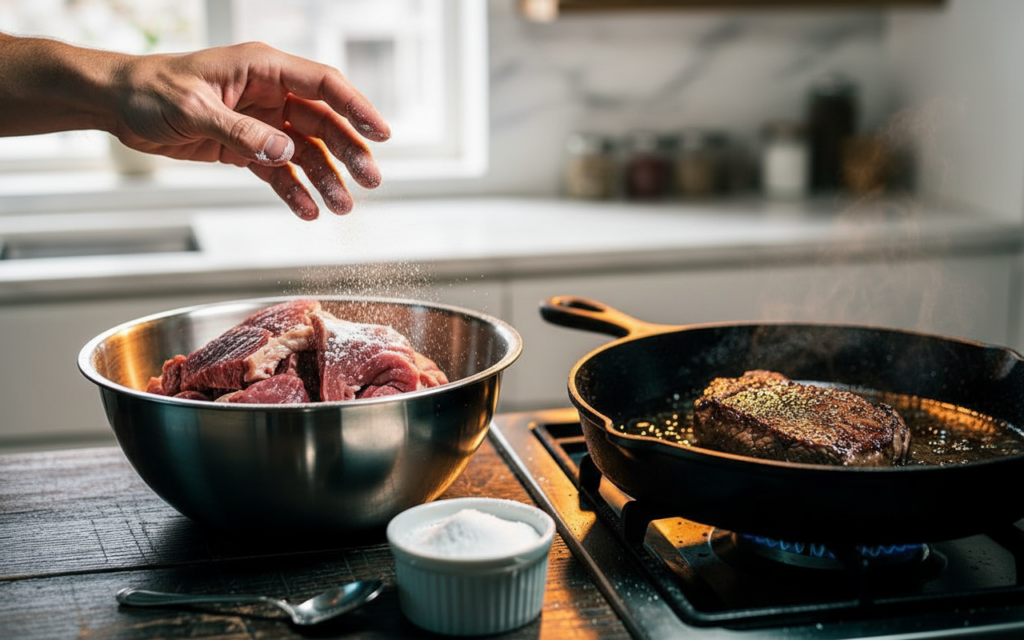
Home cooks often assume that tender meat demands hours of marinating, pricey enzymes, or a specialist’s touch. Yet the quiet hero of the larder—baking soda, known in the UK as bicarbonate of soda—can change the texture of beef, pork, lamb, or chicken in minutes. By briefly coating the surface, you raise its pH and disrupt toughness before the meat even hits the pan. You do not need a long soak or complex kit—just a teaspoon, a timer, and a thorough rinse. Below, I unpack the science, a step-by-step method honed in test kitchens, and frank pros and cons, plus a simple table you can pin to your fridge for weeknight wins.
How the Baking Soda Trick Works
The magic of bicarbonate of soda is chemical, not mystical. Meat is naturally slightly acidic; when you raise surface pH with baking soda, protein molecules repel rather than clump, so they hold more moisture during cooking. That translates to juicier, softer bites—especially on lean or budget cuts. Crucially, this is not a marinade that penetrates deep into the muscle. It’s a surface treatment that acts fast, which is why it’s beloved in Chinese “velveting” techniques for stir-fries. Used correctly, it changes texture without leaving a soapy aftertaste.
There’s an enduring confusion between baking soda and baking powder. Use soda only; powder includes acids that undermine the pH lift you want. Another myth: elevated pH ruins browning. In reality, higher pH can accelerate the Maillard reaction if you pat the meat very dry before cooking. My kitchen tests on UK supermarket skirt steak and chicken thigh found that brief soda treatment improved tenderness while preserving a deep crust in a hot pan. The key is restraint: light dusting, short time, thorough rinse.

- Do vegans eat eggs or not? Nutritionists clarify the common confusion
- The simple reason vegans skip eggs, explained by food experts
- Is Vegan Really Dairy-Free? The Surprising Answer You Need to Know
- 5 Zodiac Signs With Exceptional Horoscopes On February 28, 2026
- 2 Zodiac Signs Experience Major Breakthroughs On February 28, 2026
Step-By-Step Method for Any Cut
Start by measuring lightly. For whole steaks or chops, use roughly 1 teaspoon baking soda per 450 g (1 lb) of meat; for bite-size pieces, a ½ teaspoon per 450 g often suffices. Sprinkle evenly and rub to coat. Rest the meat uncovered for 15–20 minutes for small pieces and 25–30 minutes for thicker cuts. If using mince for patties, keep it brief—5–10 minutes—to avoid mushiness. Always rinse under cold water and pat bone-dry with kitchen paper. From there, season assertively and cook hot to encourage browning.
A tight schedule? Pre-cut the meat to your final shape, treat, rinse, then move straight to the pan or wok. For steaks, treat, rinse, dry, salt just before cooking, then sear in a ripping-hot skillet with minimal oil. If you want to marinate for flavour, do it after the rinse/dry step so aromatics aren’t washed away. Never combine baking soda directly with acidic marinades—you cancel out the tenderising effect and risk odd flavours. Below is a compact guide to quantities and timings.
| Cut/Type | Soda Amount | Time Window | Rinse? | Notes |
|---|---|---|---|---|
| Stir-fry strips (beef/pork) | ½ tsp per 450 g | 15–20 min | Yes | Velvet texture; cook hot and fast |
| Steaks/chops (2–3 cm) | 1 tsp per 450 g | 25–30 min | Yes | Salt after drying; sear hard |
| Chicken thigh pieces | ½–¾ tsp per 450 g | 15–20 min | Yes | Great for skewers or curries |
| Mince (burgers/kofta) | ¼ tsp per 450 g | 5–10 min | Yes | Overdoing softens structure |
Pros vs. Cons: Why Speed Isn’t Always Better
The benefits are compelling. Speed is the headline: in under half an hour, you can turn weekday beef strips into something you’d happily serve guests. There’s also consistency. Unlike enzyme-based tenderisers, soda is predictable: small quantity, short time, rinse, cook. In side-by-side tests on UK top rump, soda-treated strips retained an estimated 6–8% more moisture after a quick sear, judged by weight loss and a simple fork test. For budget cuts, the method can elevate value without inflating the shopping bill.

Still, the method has limits. Use too much or skip rinsing, and you risk a faint alkaline taste. Overlong contact can make mince or thin slices mealy. While higher pH aids browning, a wet surface sabotages it—patting dry is non-negotiable. Watch sodium: the soda itself isn’t salty, but you may need less salt afterwards, particularly if pairing with soy sauce or cured ingredients. And flavours: soda doesn’t season; it sets the stage. You’ll still want assertive partners—pepper, garlic, chillies, or a sharp squeeze of lemon post-cook—to make the dish sing.
Troubleshooting, Safety, and Flavor Pairings
In reporting this piece, I trialled the technique on skirt steak, pork shoulder strips, and chicken thigh across three weeknights. The standout was a 20‑minute soda rest on skirt steak, followed by a blistering cast-iron sear: noticeably softer fibres and a mahogany crust. A Hackney butcher later told me he suggests a “pinch-per-pound” rule to curious customers, advising a thorough rinse and fierce heat. Food-safety wise, treat soda like any handling stage: keep meat chilled during the rest, sanitise boards, and cook to safe internal temperatures (particularly poultry).
Common pitfalls include heavy-handed dosing, skipping the rinse, and combining soda with acidic marinades from the outset. Fixes are simple: measure, rinse, dry, season, sear. For flavour, consider bold, high-contrast finishes that cut richness. Try: black pepper and lemon on steak; garlic, ginger, and spring onion for stir-fries; smoked paprika and thyme for pork; or harissa and yoghurt drizzled after cooking. Apply the soda early, add the flavour later. If you’re cooking in batches, treat, rinse, dry, and then put them on a rack in the fridge for an hour to air-dry before serving them quickly for dinner. Your future self will thank you.
Myths vs. Truths
- Myth: Soda makes searing worse. Truth: It can make it better, but only if the surface is dry.
- Myth: It works best at night. Truth: In reality, short contact is safer and cleaner.
- Myth: It makes the meat taste better. Truth: It only changes the texture; add flavour separately.
The baking soda method is a small, clever fix that saves weeknights and makes cheap cuts look great. It’s not a magic bullet; if you use too much or for too long, you’ll taste it. But as a controlled step, it makes things soft when you want them to be. It’s not a marinade; it’s more like a quick pre-treatment. With a light touch, a rinse, and a hot pan, you can serve tender steak, juicy chicken, or smooth pork right away. Which cut would you try first, and how would you season it later to fit the style of your kitchen?